
Garden Myth Busters: Rocks or gravel in the bottom of pots improves drainage
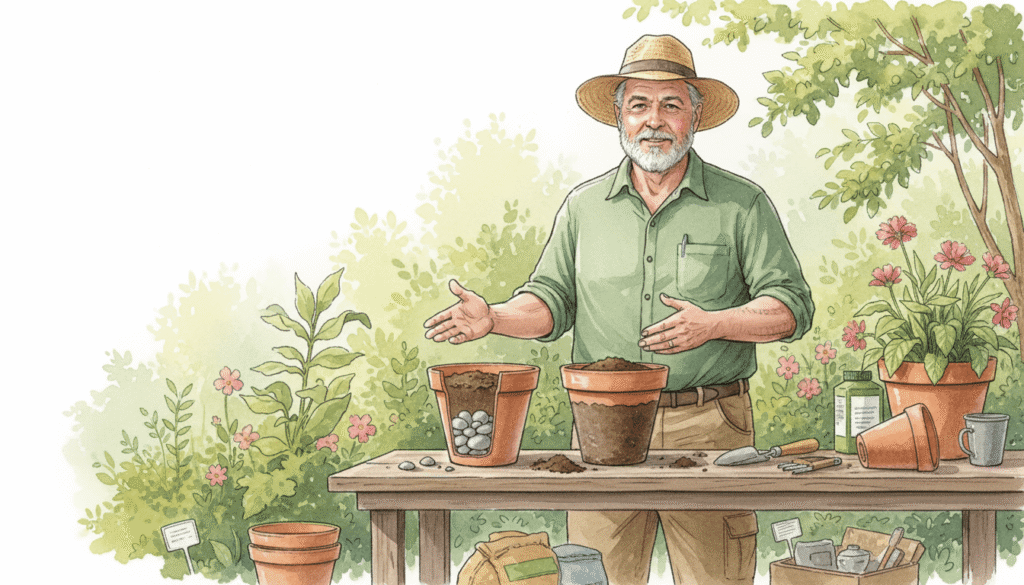 Myth: You should put rocks or gravel in the bottom of containers to improve drainage.
Reality: Research shows this actually creates a perched water table, keeping water higher in the soil column and leading to soggier roots, not better drainage. It also takes up valuable space that could be occupied by potting mix, giving the plant more room for roots.
Best practice: Use a quality potting mix in a container with proper drainage holes, letting excess water flow out naturally.
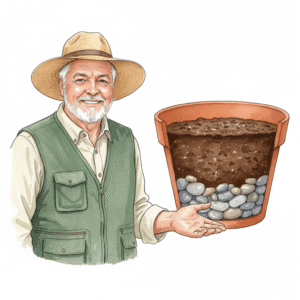
What actually improves drainage
The potting practices that actually improve drainage focus on mix structure, container design, and watering habits rather than adding rocks at the bottom of the pot.
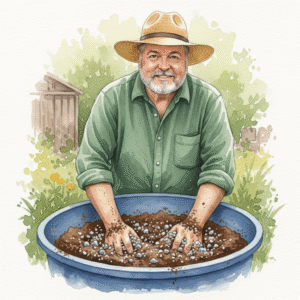
Potting mix ingredients
- Use a quality soilless mix instead of garden soil; these mixes resist compaction and let water move through more freely.
- Add extra perlite, pumice, or horticultural grit to create more air pockets for faster drying.
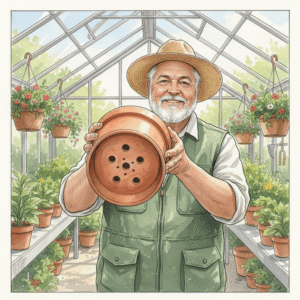
Container and setup
- Always choose pots with unobstructed drainage holes; no mix can compensate for a sealed or poorly drilled container.
- Use an appropriately sized pot; oversizing keeps the mix wetter for longer, which slows drainage and increases root rot risk.
Surface and soil structure
- Avoid fine sand or heavy topsoil in containers, which can fill pore spaces and slow drainage instead of improving it.
Watering practices
- Water thoroughly until excess runs from the holes, then let the mix partially dry to the level your plant prefers before watering again.
- Empty saucers so containers are never sitting in standing water, which negates drainage benefits and contributes to soluble salt buildup that can damage tender new roots.