
Plant Profile — Garden Wise Guy
If there were a bumper sticker for gardeners like me, it would probably say: “I Brake for Penstemons.”
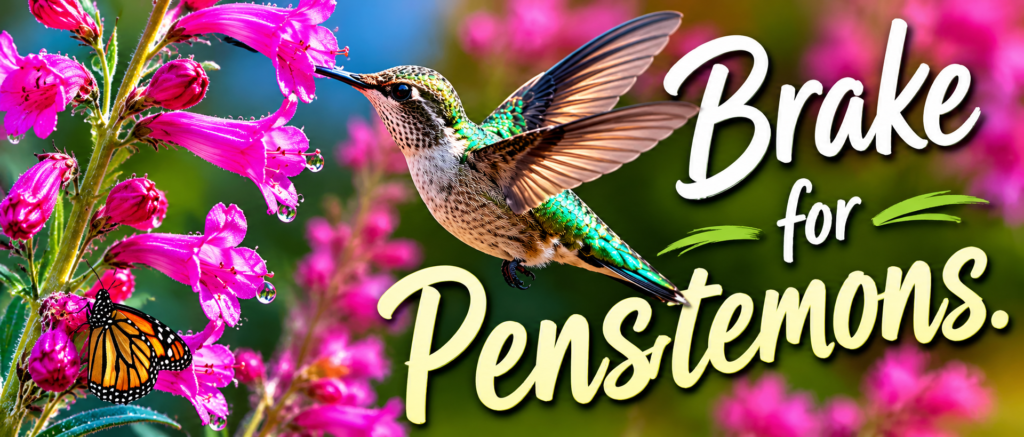
Seriously. If I spot a patch of penstemons blooming along a trail, tucked into a rock garden, or spilling through a dry landscape bed, I’m stopping. Doesn’t matter if I’m running late, hiking uphill, or balancing awkwardly on a rocky slope trying to get the perfect photo. These plants are impossible to ignore.
And honestly? More Colorado gardeners should be planting them.
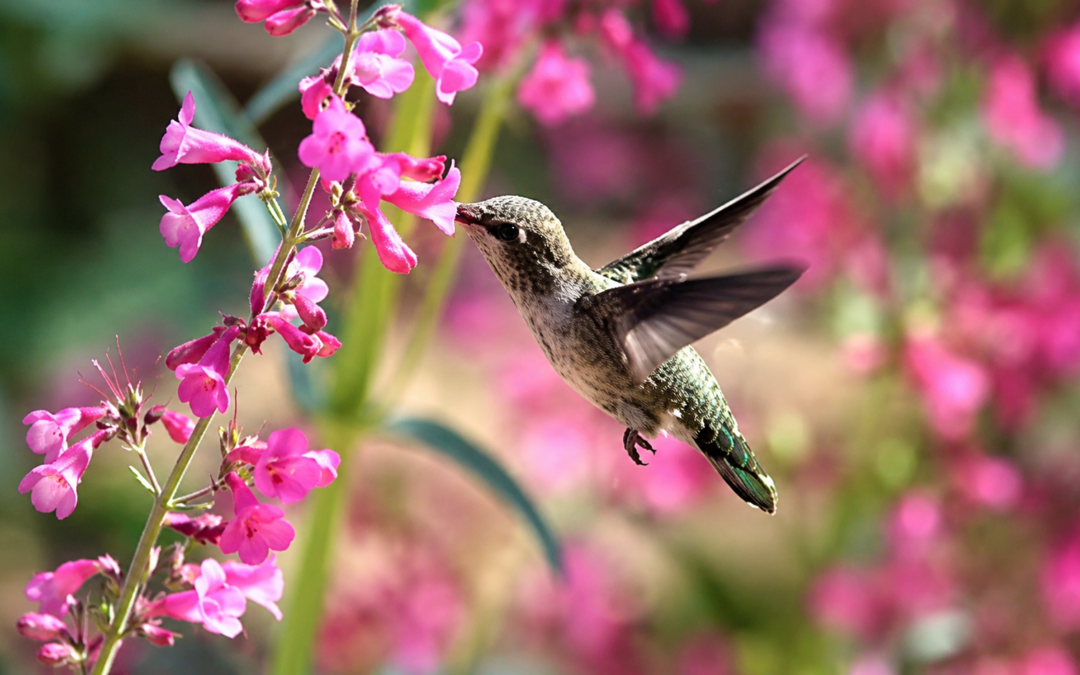
Native penstemons — often called beardtongues — are some of the toughest, most pollinator-friendly, low-water perennials you can grow in the West. They thrive in poor soils, handle drought beautifully, attract hummingbirds and native bees like magnets, and put on a flower show that looks almost too good for such an easy-care plant.
For anyone trying to build a water-wise Colorado garden without sacrificing color, penstemons deserve a starring role.
Are Penstemons Drought Tolerant?
Yes — penstemons are among the most reliably drought-tolerant perennials you can plant in Colorado. Once established, most native species need no supplemental water at all in an average year, and several actively resent being watered on the same schedule as the rest of the border.
The reason is where they come from. Colorado’s native penstemons evolved on dry slopes, gravelly foothills and open shortgrass country — fast-draining soil, and rain that arrives in bursts rather than steadily. They put roots down early and then live on what the sky gives them.
What that means in a home garden:
- First season: water deeply about once a week while the roots establish.
- After that: a deep soak once or twice a month through the hottest weeks is plenty. Plenty of Front Range gardeners give them nothing at all.
- Too much water is the real danger, not too little. Penstemons sitting in wet, heavy or poorly drained soil rot at the crown. That is what kills most of them.
- Keep mulch off the crown. Gravel or squeegee suits them far better than shredded bark held against the stems.
If you are building a xeric bed or cutting your watering back, penstemons belong near the top of the list — alongside other Colorado natives and nativars. Detailed planting and watering notes are further down this page.
Why Penstemons Belong in Every Colorado Garden
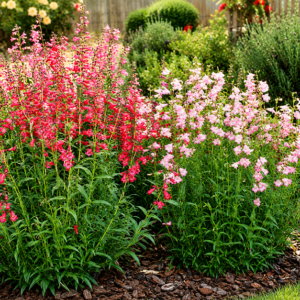 Penstemons are native to North America, with roughly 280 species found from Canada all the way into Guatemala. Here in the western United States, they absolutely shine because many evolved in dry, rugged climates where rainfall is limited and drainage is excellent.
That’s exactly why they perform so well in Colorado landscapes.
These plants are built for:
- Drought tolerance
- Rocky soils
- Full sun exposure
- Pollinator support
- Low-maintenance gardening
- Xeriscaping and water-wise landscapes
And unlike some drought-tolerant plants that can look a little… scraggly… penstemons bring serious beauty to the garden. Their tubular flowers come in electric purples, vivid reds, deep pinks, icy blues, creamy whites, and even soft peach and orange shades. Depending on the species, they can range from tiny alpine plants only a few inches tall to towering varieties reaching several feet high.
Why Hummingbirds and Bees Love Penstemons
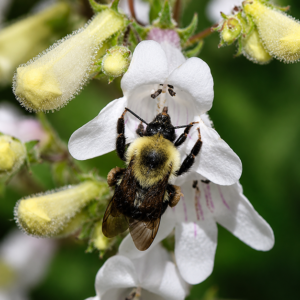 One of the best things about penstemons is how alive they make your garden feel. Hummingbirds dive into the trumpet-shaped blooms nonstop, especially the red and pink varieties. Native bees absolutely cover the flowers during bloom season. Bumblebees frequently crawl deep inside the blossoms for nectar and pollen — and sometimes even nap there overnight.
Early morning gardeners often find sleepy bumblebees tucked inside the blooms before the day warms up. Penstemons are one of those rare plants that are both beautiful and ecologically valuable.
Why They’re Called “Beardtongues”
The nickname “beardtongue” comes from the fuzzy little hairs found inside the flower. Those tiny hairs force pollinators to push farther into the bloom, helping improve pollination naturally. Nature’s pretty smart like that. Once you look closely at a penstemon flower, you’ll immediately see the detail and complexity that makes this genus so fascinating.
My Personal Favorite Penstemons for Colorado Gardens
Rocky Mountain Penstemon (Penstemon strictus)
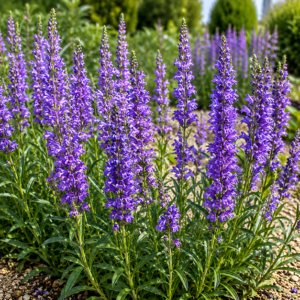 This is probably one of the easiest and most reliable penstemons for Colorado gardeners. It produces striking violet-blue flowers on upright stems and handles drought exceptionally well once established. Pollinators absolutely swarm it. If you’re new to native gardening, start here.
Palmer’s Penstemon (Penstemon palmeri)
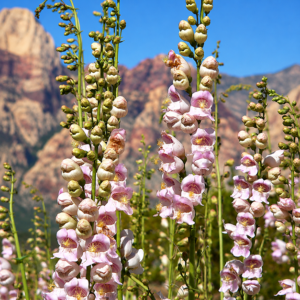 A showstopper. This taller species produces soft pink blooms with a light fragrance — something unusual among penstemons. It thrives in dry western gardens and creates incredible vertical interest in xeric landscapes.
Littleflower Penstemon (Penstemon procerus)
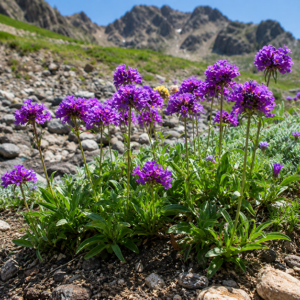 Small but mighty. This compact native species blooms heavily despite staying under a foot tall. It naturalizes beautifully and can even thrive in gravelly soils where many perennials struggle. Perfect for rock gardens and naturalistic plantings.
Whipple’s Penstemon (Penstemon whippleanus)
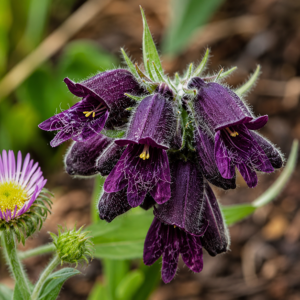 If you like dramatic flowers, this one gets attention fast. Its deep purple blooms almost look black in certain lighting. It tolerates slightly more moisture than many western species while still preferring excellent drainage. An outstanding choice for native plant collectors.
Pineleaf Penstemon (Penstemon pinnifolius)
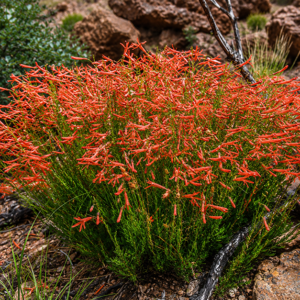 One of the finest xeric perennials for Colorado gardens, Pineleaf Penstemon forms a tidy mound of narrow, evergreen foliage topped with bright tubular flowers in shades of red, orange, or occasionally yellow from early summer well into fall. Native to rocky slopes and canyonlands of the Southwest and southern Colorado, this drought-tolerant species thrives in lean, sharply drained soils and full sun. Its long bloom season and vivid flower color make it a magnet for hummingbirds, while the compact habit fits beautifully into rock gardens, gravel beds, and water-wise landscapes. Unlike many taller penstemons, Pineleaf Penstemon stays neat and attractive year-round with minimal maintenance.
Scarlet Bugler Penstemon (Penstemon barbatus)
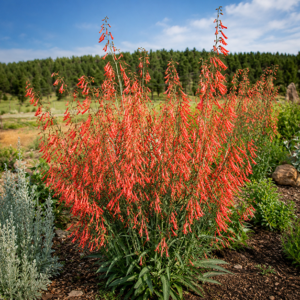 Scarlet Bugler Penstemon is one of the showiest native penstemons for Colorado gardens, producing tall spikes of brilliant scarlet-red tubular flowers that sway above blue-green foliage from early to midsummer. Native to southern Colorado and the Southwest, this adaptable perennial handles heat, drought, and poor soils with ease once established. Hummingbirds absolutely flock to the nectar-rich blooms, often visiting repeatedly throughout the day. It readily reseeds in favorable conditions, creating natural drifts that look right at home in informal landscapes.
Firecracker Penstemon (Penstemon eatonii)
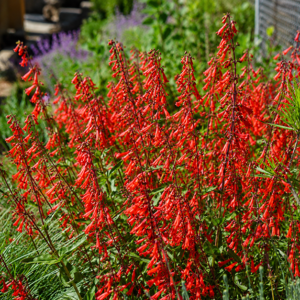 Firecracker Penstemon earns its name with blazing spikes of vivid red flowers that appear earlier than many other penstemons, often beginning in spring and continuing into early summer. Native to dry desert slopes and canyon regions of the western United States, including parts of western Colorado, it is exceptionally well adapted to hot, sunny, low-water conditions. This species performs best in sharply drained soils and is especially effective in desert-style landscapes, gravel gardens, and dry borders where bold color is needed with very little irrigation.
Bridges’ Penstemon (Penstemon rostriflorus)
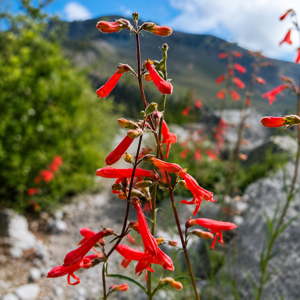 Bridges’ Penstemon is a spectacular western native known for its elegant arching stems covered in coral-red to scarlet tubular flowers that bloom through much of the summer. Native to rocky slopes, canyonlands, and dry mountain regions of western Colorado and the Four Corners area, it combines exceptional drought tolerance with one of the longest flowering periods among native penstemons. The plant’s airy, graceful habit blends naturally with ornamental grasses, salvias, agastache, and other xeric perennials in sunny Colorado landscapes.
The Truth About Penstemons Being “Short-Lived”
You’ll often hear gardeners say penstemons are short-lived perennials. Sometimes that’s true. But it’s also misunderstood.
Many species naturally grow in harsh climates where survival depends on reseeding after drought cycles. Some varieties may only live a few years, while others can persist for decades in the right conditions.
The real secret to longevity? Drainage.
Most penstemons hate soggy soil far more than they hate drought. If you plant them in heavy, wet clay and overwater them, they decline quickly. But give them:
- Sharp drainage
- Lean soil
- Full sun
- Moderate watering
…and they often thrive with very little attention. Honestly, many gardeners kill penstemons with kindness.
How to Use Penstemons in the Landscape
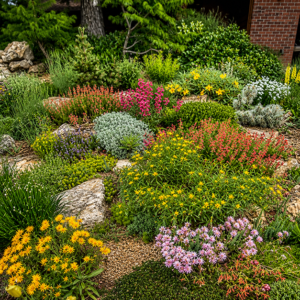 One of the smartest ways to design with penstemons is by planting multiple species that bloom at different times. Some flower in late spring. Others peak in midsummer. A few continue blooming into early fall. By staggering bloom periods, you can create months of color while supporting pollinators through the growing season.
Penstemons pair beautifully with:
- Salvias
- Yarrow
- Blanket flower
- Native grasses
- Agastache
- Lavender
- Sedum
- Rabbitbrush
They’re ideal for:
- Xeriscapes
- Pollinator gardens
- Rock gardens
- Dry borders
- Native plant landscapes
- Gravel gardens
Garden Wise Guy Tips for Growing Penstemons Successfully
Here’s the part most gardeners need to hear: Don’t baby them. Penstemons are tough plants. The more you try to pamper them, the worse they often perform.
Planting Tips
- Plant in full sun
- Prioritize drainage above everything else
- Avoid overly rich soil
- Water regularly while establishing, then reduce irrigation
- Spring planting works best in Colorado
Watering
Once established, most native penstemons need very little supplemental water. If they wilt briefly during extreme afternoon heat, a little extra moisture can help — but avoid constantly wet soil.
Pruning
- Cut deciduous varieties back to a few inches above the soil after dormancy
- Leave semi-evergreen types partially intact through winter
- Remove old woody growth in spring to encourage fresh flowering stems
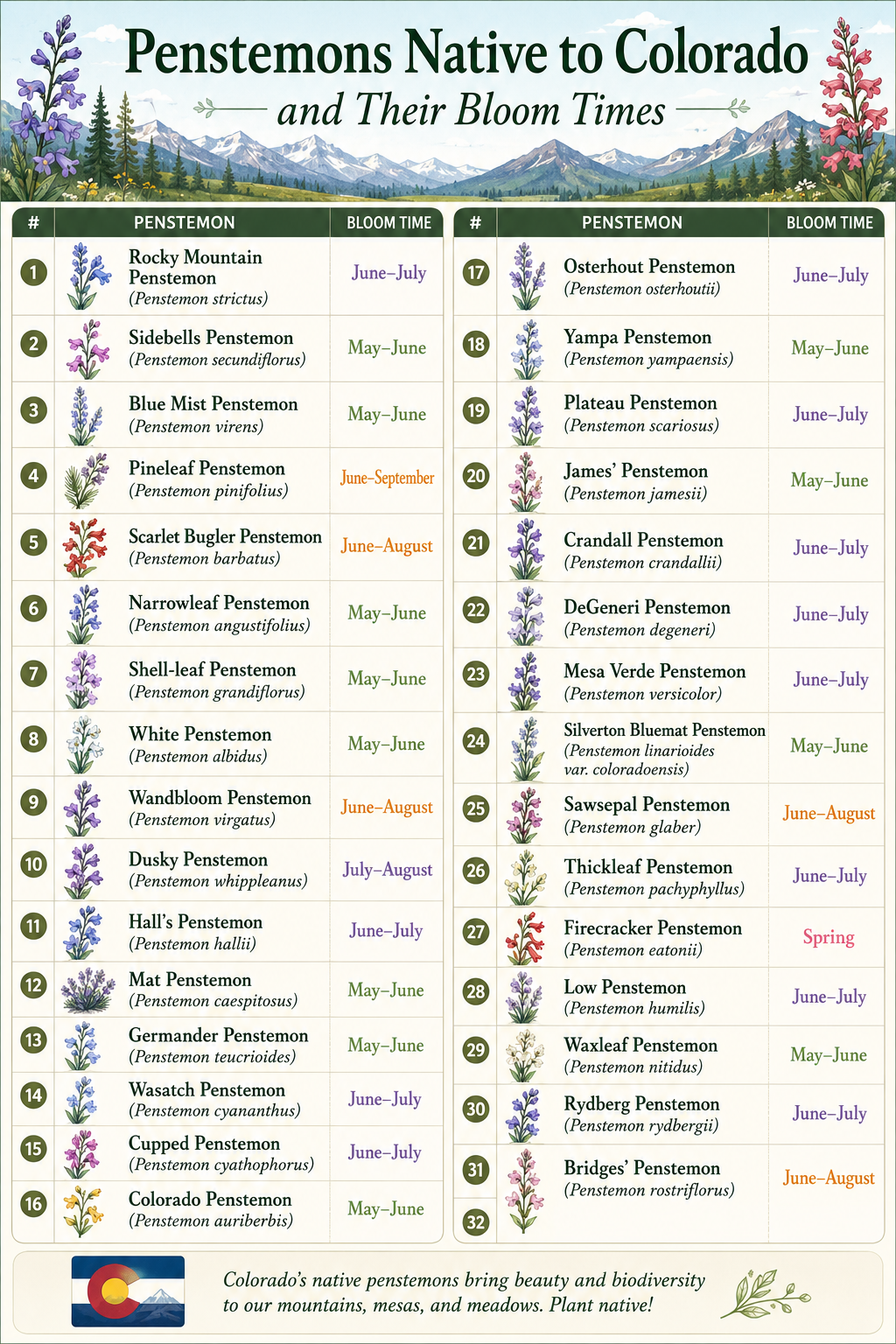
click the image to enlarge
Penstemons Native to Colorado and Their Bloom Times
- Rocky Mountain Penstemon (Penstemon strictus) — June–July
- Sidebells Penstemon (Penstemon secundiflorus) — May–June
- Blue Mist Penstemon (Penstemon virens) — May–June
- Pineleaf Penstemon (Penstemon pinifolius) — June–September
- Scarlet Bugler Penstemon (Penstemon barbatus) — June–August
- Narrowleaf Penstemon (Penstemon angustifolius) — May–June
- Shell-leaf Penstemon (Penstemon grandiflorus) — May–June
- White Penstemon (Penstemon albidus) — May–June
- Wandbloom Penstemon (Penstemon virgatus) — June–August
- Dusky Penstemon (Penstemon whippleanus) — July–August
- Hall’s Penstemon (Penstemon hallii) — June–July
- Mat Penstemon (Penstemon caespitosus) — May–June
- Germander Penstemon (Penstemon teucrioides) — May–June
- Wasatch Penstemon (Penstemon cyananthus) — June–July
- Cupped Penstemon (Penstemon cyathophorus) — June–July
- Colorado Penstemon (Penstemon auriberbis) — May–June
- Osterhout Penstemon (Penstemon osterhoutii) — June–July
- Yampa Penstemon (Penstemon yampaensis) — May–June
- Plateau Penstemon (Penstemon scariosus) — June–July
- James’ Penstemon (Penstemon jamesii) — May–June
- Crandall Penstemon (Penstemon crandallii) — June–July
- DeGeneri Penstemon (Penstemon degeneri) — June–July
- Mesa Verde Penstemon (Penstemon versicolor) — June–July
- Silverton Bluemat Penstemon (Penstemon linarioides var. coloradoensis) — May–June
- Sawsepal Penstemon (Penstemon glaber) — June–August
- Thickleaf Penstemon (Penstemon pachyphyllus) — June–July
- Firecracker Penstemon (Penstemon eatonii) — Spring
- Low Penstemon (Penstemon humilis) — June–July
- Waxleaf Penstemon (Penstemon nitidus) — May–June
- Rydberg Penstemon (Penstemon rydbergii) — June–July
- Bridges’ Penstemon (Penstemon rostriflorus) — June–August
Final Thoughts
If you’re building a Colorado garden for the future — one that uses less water, supports pollinators, and still looks incredible — penstemons should absolutely be on your planting list. They’re rugged. They’re colorful. They’re native. And they bring life to the garden in ways few perennials can.
Honestly, once you start growing penstemons, you’ll understand why some of us stop the car every time we see one blooming.
— The Garden Wise Guy
Gardening isn’t just a hobby… it’s a lifestyle.
Stay Garden Wise, My Friends
Keep your shovel sharp, be careful where you dibble, and stay Garden Wise.
Radio Show
Saturday Mornings
Catch The Garden Wise Radio Show for practical garden talk.
Shop Now
Garden Lifestyle Gear
Browse Clever Gardening tees, hats, and gifts.
Have a Colorado gardening question of your own? Ask Keith.
Still have a gardening question?
Keith answers Colorado gardening questions on the radio show and online. Tell him what you are growing, where in Colorado you are growing it, and what is going wrong.
Want seasonal Colorado gardening guidance?
The Garden Wise Journal arrives once a month with what to do in the garden right now, plus show updates from Keith.