
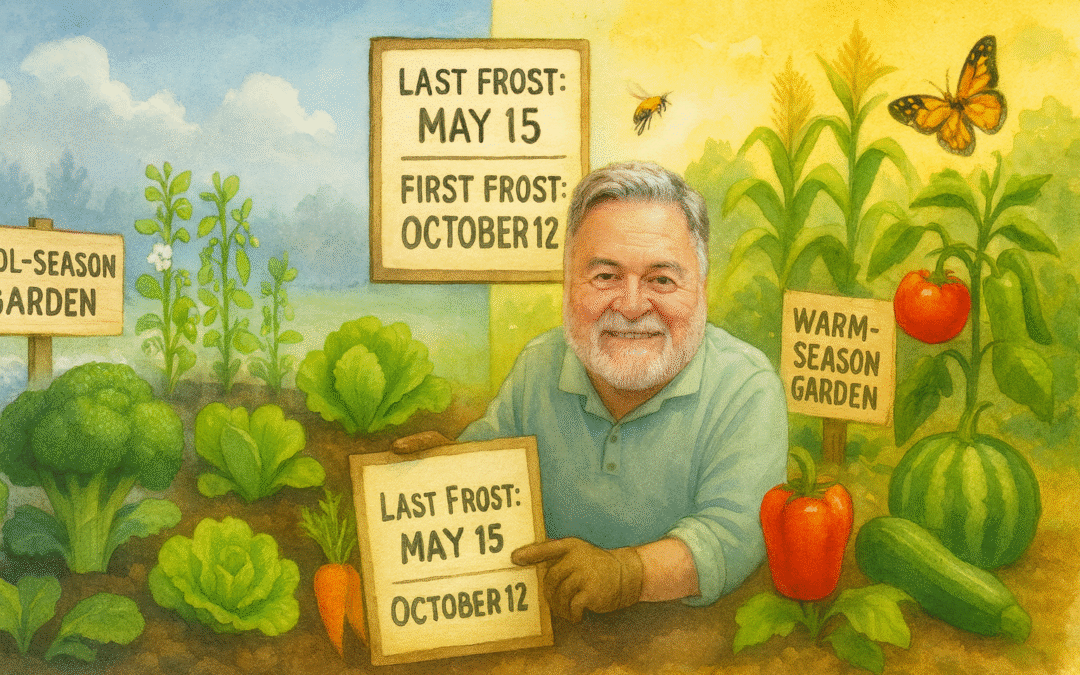
Cool Season vs. Warm Season Vegetables
Know your last frost date in the spring and the first frost date in the fall for your area.
Denver Metro: Average last frost date May 15
Denver Metro: Average first frost date October 12
Cool-Season Vegetables
 Cool-season crops are the first ones to plant in the garden year. This can be anytime from several weeks to a couple of months before the last frost date. These early vegetables cannot only withstand cold temperatures, they need them to germinate, grow, set fruit, and mature.
It is important to plant cool-season crops early enough in the spring so they can complete their full cycle up to harvest before the temperatures get too warm. While some cool-season vegetables can withstand hot weather and will still grow, their quality becomes inferior.
Many spring cool-season crops can be sown again in the fall. Keep in mind the average first frost date and days to maturity.
Cool-season vegetables are generally grown directly from seed in the garden, either as soon as the soil can be worked in the spring or until the soil and air have reached certain minimum temperatures that are usually indicated on the seed package.
Common cool-season vegetables: asparagus, beets, broccoli, Brussels sprouts, chives, cabbage, carrots, cauliflower, Swiss chard, kale, leeks, lettuce, onions, parsnips, peas, radishes, spinach, and turnips.
Warm-Season Vegetables
 Warm-season crops require higher soil and air temperatures; they are always planted after the last frost date. The long-season crops are usually started from seed indoors and transplanted into the garden as soon as the soil and air are warm enough. Tomatoes, peppers, and eggplant are good examples. Fast growers like beans, corn, and squash can be directly sown outdoors in the garden.
Common warm-season vegetables: beans, corn, cucumbers, eggplant, melons, peppers, zucchini and summer squash, pumpkin and winter squash, sweet potato, tomato, and watermelon.
Frequently Asked Questions
What is the difference between cool season and warm season vegetables?
Cool season vegetables are planted first and tolerate cold temperatures, while warm season vegetables need warmer soil and air and are planted after the last frost.
When should I plant cool season vegetables?
Cool season vegetables can be planted several weeks to a couple of months before the last frost, as long as they mature before warm weather arrives.
Why do cool season vegetables need cooler temperatures?
Cool temperatures support proper germination, growth, and maturity. When temperatures rise too much, quality and performance decline.
Can cool season vegetables be planted again in the fall?
Many cool season vegetables can be planted again in fall if you account for the first frost date and days to maturity.
Are cool season vegetables usually direct seeded or transplanted?
Most cool season vegetables are direct seeded as soon as the soil can be worked or reaches minimum planting temperatures.
When should I plant warm season vegetables?
Warm season vegetables are planted after the last frost when soil and air temperatures are consistently warm.
Which warm season vegetables are good examples of crops started indoors?
Tomatoes, peppers, and eggplant are commonly started indoors and transplanted once conditions are warm enough.
What are common examples of cool season vegetables and warm season vegetables?
Cool season vegetables include broccoli, carrots, lettuce, peas, spinach, kale, and radishes. Warm season vegetables include beans, corn, cucumbers, melons, squash, tomatoes, and peppers.