
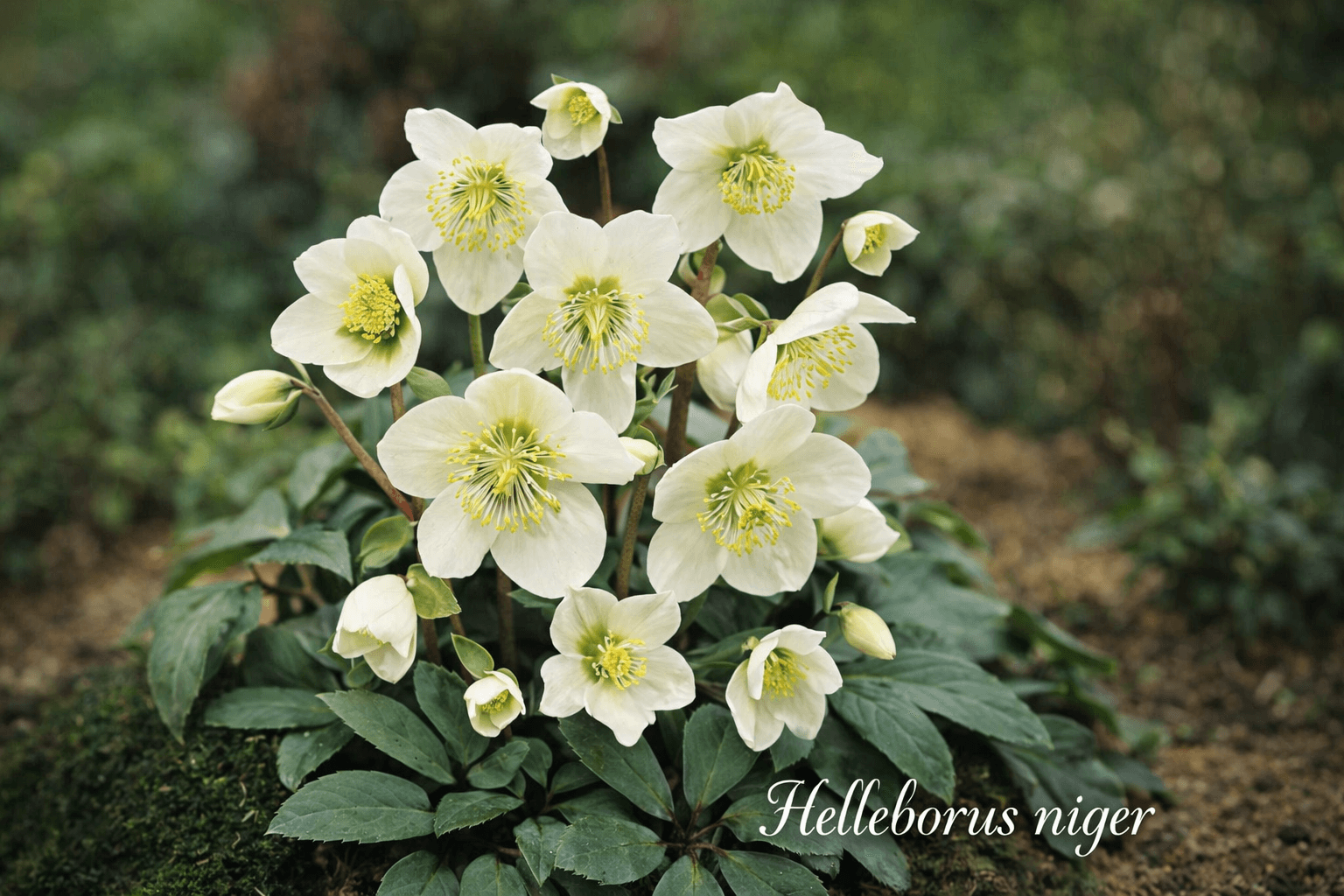
Helleborus niger, the Christmas Rose
Helleborus niger, commonly known as Christmas Rose, is a winter-blooming perennial prized for its early, sparkling white flowers, evergreen foliage, and reliability in shade gardens. This classic hellebore brings structure and bloom to the garden when almost nothing else is flowering. Mine is always in bloom by December 25th here in my Centennial, Colorado, garden. There are several named varieties available that are superior to the straight species and well worth searching out at your local garden center or trusted online garden supplier.
Helleborus niger is quite different from its cousin, the Lenten Rose, Helleborus orientalis, and its hybrids, which bloom later in spring and come in a wide variety of colors. Both are well worth growing in any shady spot and add year-round interest to the landscape with their bold, evergreen foliage.
Origins and Botany
Christmas Rose is native to the mountainous and woodland regions of central and southern Europe, especially alpine and subalpine zones. It belongs to the buttercup family (Ranunculaceae) and forms low, clumping mounds of leathery, dark green, evergreen leaves. The botanical name “niger” refers to its dark, almost black roots, while the common name “Christmas Rose” reflects its traditional association with midwinter flowering and folklore.
Hardiness and Growth Habit
Helleborus niger is generally hardy in USDA Zones 3 to 8, making it suitable for cold winter climates as well as more moderate regions. Plants typically reach about 8 to 12 inches tall and 12 to 18 inches wide, slowly forming dense clumps over time. Once established, Christmas Rose is long-lived, with a deep root system that resents frequent disturbance or division.
Culture and Care
-
- Site Christmas Rose in partial to full shade, with shelter from direct afternoon winter sun.
- Provide humus-rich, moist but well-drained soil. Neutral to slightly alkaline conditions are ideal, but it will tolerate a range of soils as long as drainage is good.
- Water regularly during the first couple of years while roots establish, then allow the plant to dry slightly between waterings. Avoid waterlogged conditions.
- Mulch annually with leaf mold or compost to keep the root zone cool and enriched, but keep mulch slightly back from the crowns.
In late winter, remove the oldest, tattered leaves to showcase new flowers and fresh foliage as it emerges in early spring.
- All parts of the plant are considered toxic if ingested, and the sap can be a mild skin irritant. Wear gloves if you have sensitive skin, and keep plants away from pets and children.
Bloom Time and Flowers
In most climates, Christmas Rose will be in bloom as early as late December. In colder regions, the main display is typically from late winter into early spring. Large, bowl-shaped, usually outward-to-slightly-nodding white flowers appear on short stems just above or among the foliage. As the flowers age, their petals often blush to soft pink or green, extending the ornamental season for many weeks. Blooms make excellent cut flowers and are also striking when floated in shallow bowls of water indoors.
Ornamental Attributes and Landscape Uses
The glossy, dark green, evergreen foliage provides year-round structure and is especially valuable in woodland, shade, and winter gardens. For the best appearance, remove the previous year’s foliage before new leaves appear in spring.
Christmas Rose is ideal for:
- Shaded borders and woodland edges
- Underplanting for deciduous shrubs and small trees
- Cottage and naturalistic plantings
- Winter containers in sheltered spots
Plants are generally unpalatable to deer and rabbits, adding to their usefulness in problem areas. Combine Helleborus niger with early bulbs such as snowdrops and crocus, evergreen ferns, and shade-tolerant groundcovers for a layered winter-to-spring display.
Propagation and Maintenance Notes
Propagate primarily by seed or occasionally by careful division of mature clumps. Seedlings may take several years to reach flowering size. Because plants dislike disturbance, division should be done sparingly and only on well-established clumps. Christmas Rose is relatively low maintenance, with occasional grooming of old foliage and a yearly top dressing of compost usually sufficient for good performance.
