
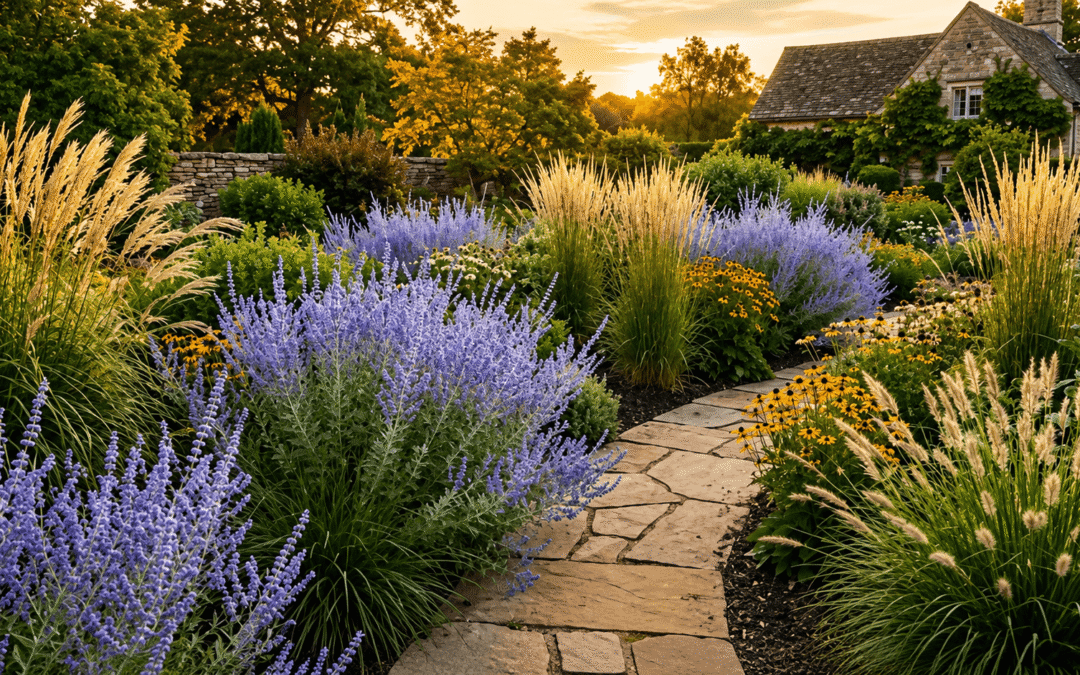
Yes, I’m actually recommending Russian sage. The new varieties are not the garden thug of old. It is one of those Colorado garden workhorses that earns its keep: silvery, aromatic foliage, a long haze of lavender-blue flowers, and remarkable tolerance for heat, sun, and lean soil.
Its current botanical name is Salvia yangii, formerly Perovskia atriplicifolia, and it is an excellent choice when you want late-season color without a high-water routine.
Plant at a Glance
- Common name: Russian sage
- Botanical name: Salvia yangii (formerly Perovskia atriplicifolia)
- Plant family: Mint family, Lamiaceae
- Plant type: Herbaceous, semi-woody perennial or subshrub
- Mature height and spread: Typically 3 to 5 feet tall and 3 to 4 feet wide; newer compact cultivars stay closer to 2 to 3 feet
- Growth habit: Upright, open, airy, and shrub-like; mature plants form broad clumps of silvery stems
- Native range: Central Asia and Tibet, not Russia
- Hardiness: Usually USDA Zones 4 to 9; hardy to about 8,000 feet in suitable sites
- Deer and rabbit resistance: Deer tend to avoid its strongly aromatic foliage; rabbit resistance is generally good, though no plant is completely immune when animals are hungry
- Pollinator value: Nectar-rich lavender-blue flowers draw bees and other beneficial insects during the late-summer bloom season
New varieties are a great improvement over the original species.
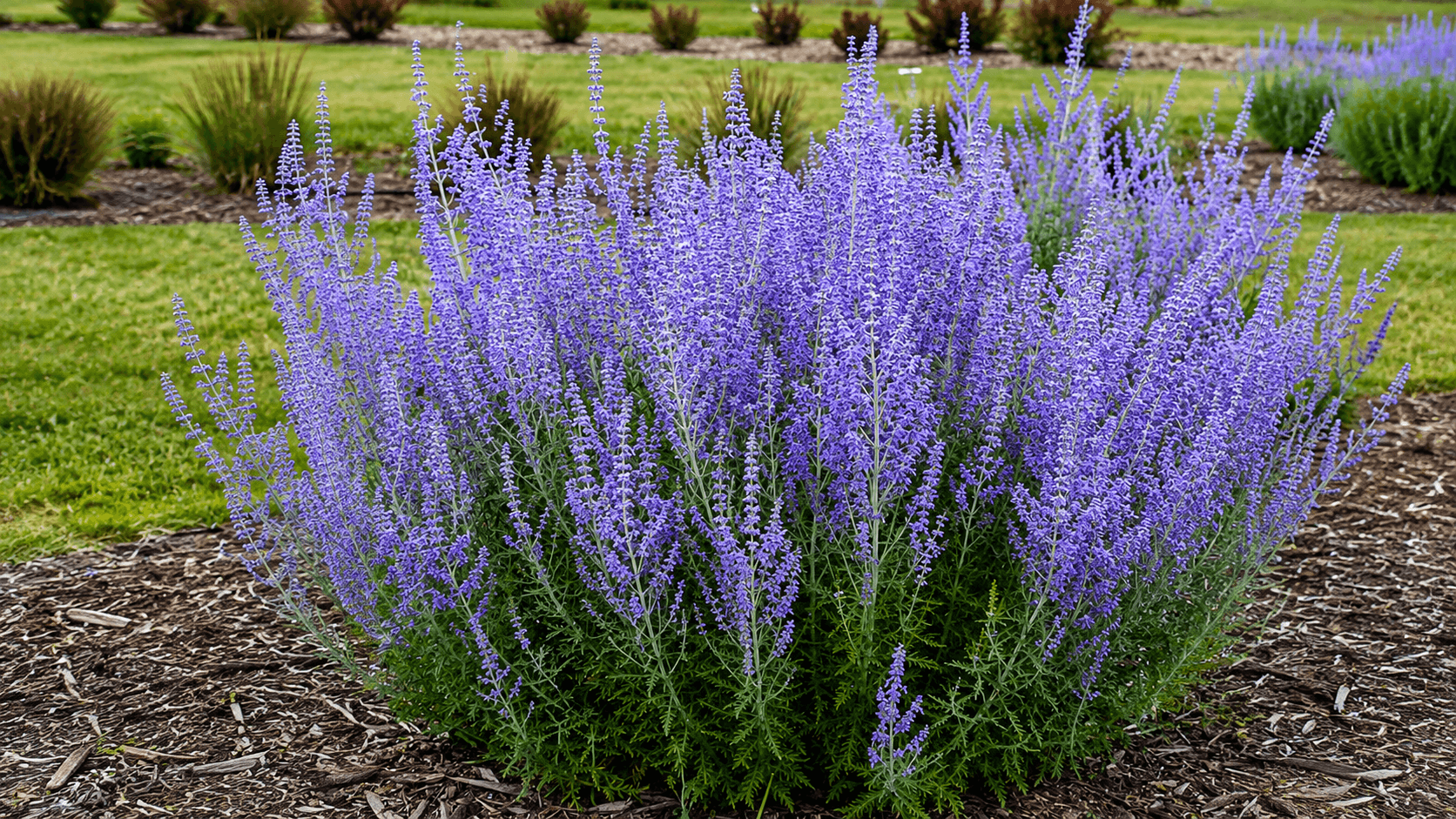
Blue Spire
Blue Spire, a classic upright selection with deep purple-blue flowers;
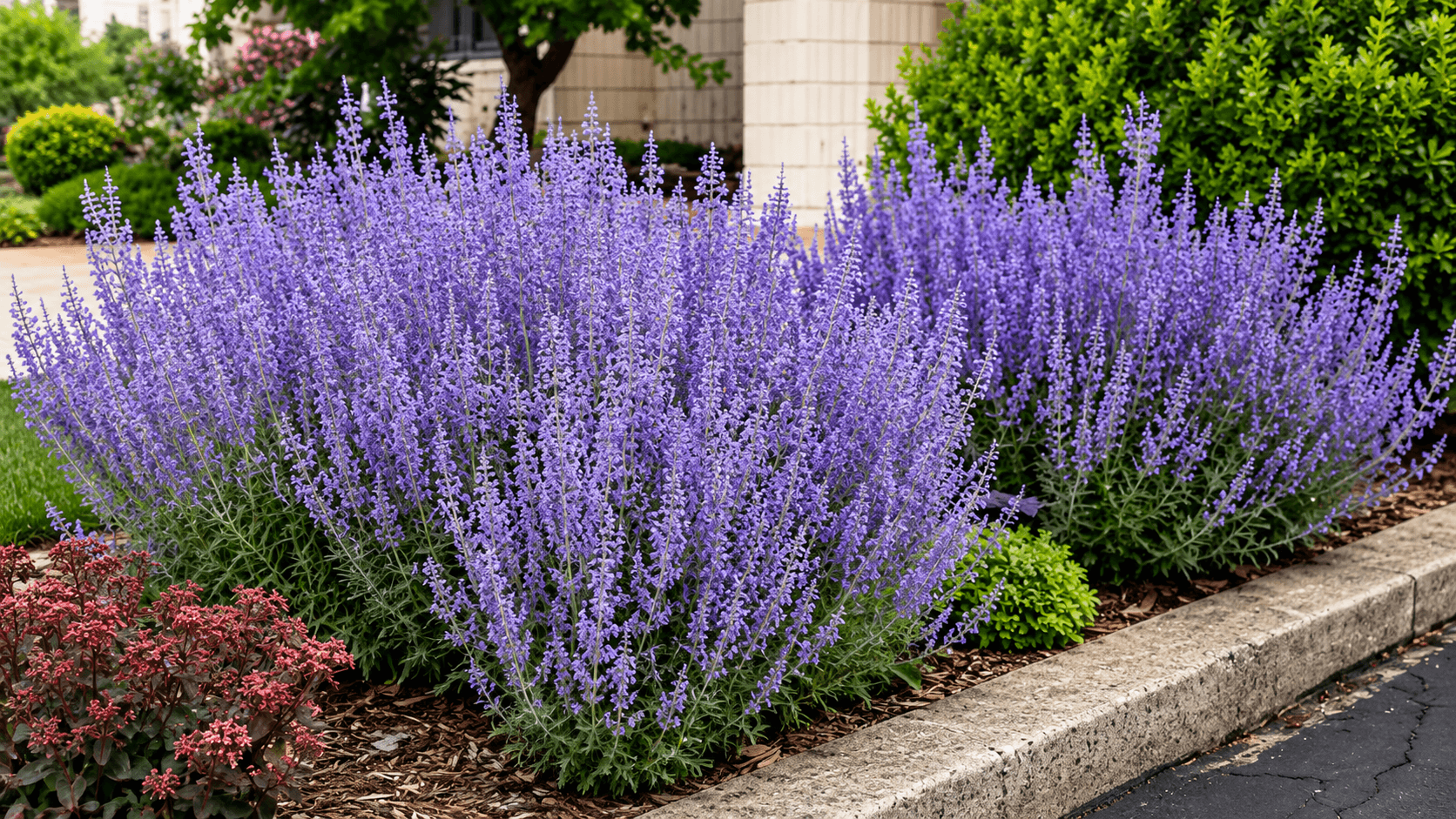
Denim ‘n Lace
Denim ‘n Lace, valued for stronger stems and a more compact 2- to 3-foot habit;
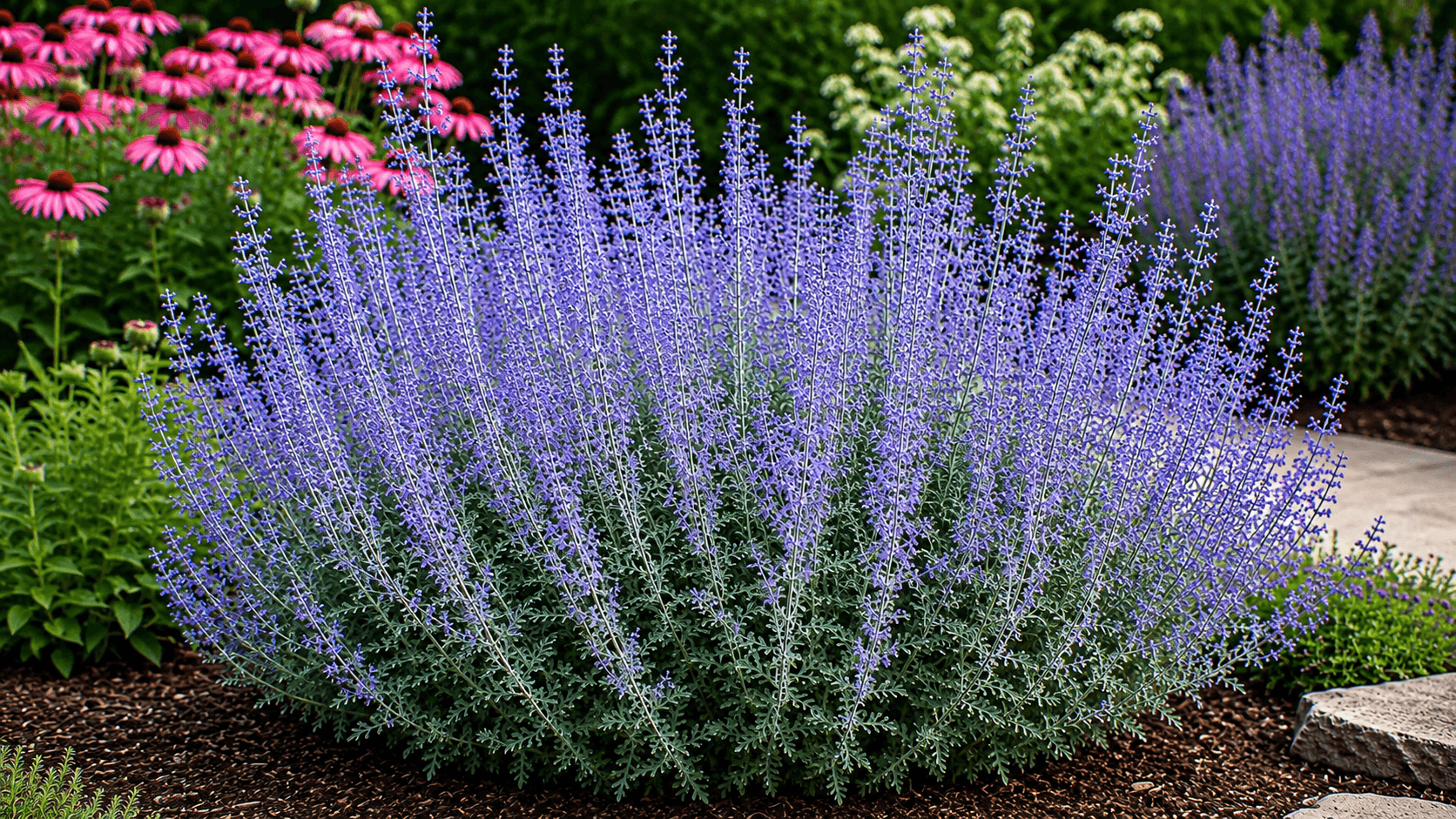
Little Spire
Little Spire, a smaller choice for tight spaces; and Longin, which has especially stiff, upright stems.
Standout Features
Russian sage brings an airy, almost cloud-like effect to the garden. Its long wands of tiny purple-blue tubular flowers rise above finely cut, silvery-gray leaves from summer into fall. The foliage is softly fuzzy and aromatic when brushed, with a scent that helps discourage browsing deer.
This is a plant that looks good even before it blooms. The pale foliage cools down hot color combinations, softens bolder flowers, and provides a useful contrast to dark green leaves or coarse-textured plants.
In winter, its sturdy stems can remain standing and catch frost or snow, an understated but lovely feature in a Colorado landscape.
Growing Requirements
Russian sage is exceptionally well matched to many Front Range gardens. It thrives in Colorado’s bright sun, dry air, wind, and commonly alkaline soils, meaning soils with a higher pH, often found in areas with limestone-derived ground.
Sun: Full sun is essential. Aim for at least six hours of direct sunlight daily. Too much shade leads to fewer flowers and floppy stems.
Soil: Average to lean, very well-drained soil is best. “Lean” means soil that is not overly enriched with compost or fertilizer. Heavy clay can work if drainage is improved. Plant slightly high and mix in coarse material only if needed to prevent water from sitting around the roots.
Water: Water deeply and regularly during the first growing season while roots establish. Once established, water sparingly during extended dry spells. Overwatering is a bigger risk than underwatering.
Fertilizer: Usually unnecessary. Avoid high-nitrogen fertilizer, which can cause lush but weak, floppy growth.
Spacing: Give standard varieties 3 to 4 feet of room. Compact varieties may be spaced 2 to 3 feet apart.
Best planting time: Plant in spring after the soil begins to warm, or in early fall with enough time, at least a month, before a hard freeze.
Best settings: Xeriscapes, sunny borders, gravel gardens, pollinator plantings, and large containers with excellent drainage. It is not a good choice for soggy rain gardens, shade gardens, or persistently wet lawn edges.
Bloom and Seasonal Interest
Expect the main bloom display from mid-July through August, often extending into September or early fall depending on weather and cultivar. Each stem carries branching sprays of small lavender-blue flowers, creating a soft veil of color rather than a single bold bloom.
New shoots emerge in spring, followed by aromatic silver-gray foliage. The plant grows steadily through early summer, then reaches peak showtime when many early perennials are fading. After frost, it goes dormant, but leaving the stems in place provides valuable winter texture and helps protect the crown, the point where stems meet roots.
How to Plant and Care
Dig a hole about twice as wide as the root ball, but no deeper. Set the plant so the top of its root ball is level with the surrounding soil.
Backfill with native soil, water thoroughly, and mulch lightly with shredded bark or gravel, keeping mulch a few inches away from the stems.
Water consistently during year one. Afterward, let the soil dry somewhat between deep soakings.
Leave stems standing through winter rather than cutting them down in fall.
In early to mid-spring, once new growth begins near the base, cut last year’s stems back to about 6 to 12 inches tall. This keeps plants from becoming woody and encourages fuller flowering.
Deadheading is optional. Removing faded flower wands can neaten the plant, but Russian sage will continue looking attractive without it. Division is possible but slow and often unnecessary. Named varieties are better propagated by cuttings if you want more plants.
Companion Plants
- Purple coneflower (Echinacea purpurea): Its big, upright daisy flowers create a bold contrast with Russian sage’s fine texture.
- Sunset hyssop (Agastache rupestris): Coppery-orange flowers and fragrant foliage make a striking warm-and-cool color combination.
- Black-eyed Susan (Rudbeckia): Golden flowers pop against lavender-blue blooms and extend late-season pollinator appeal.
- Winecups (Callirhoe involucrata): A low, trailing Colorado-friendly perennial that fills in at the base of taller Russian sage.
- Blue grama grass (Bouteloua gracilis): This native grass adds movement, drought tolerance, and fine texture without competing for attention.
- Karl Foerster feather reed grass: Its vertical form echoes Russian sage stems and gives the planting more structure.
- Blanket flower (Gaillardia): Red and gold blooms add cheerful contrast in a hot, dry border.
- Bearded iris: Beautiful spires of orchid-like flowers in spring. Russian sage helps hide the less-than-attractive iris foliage for the rest of the summer.
Common Problems
Russian sage has few serious insect or disease problems once established. The main challenge is root rot, caused by soil that remains wet or poorly drained, especially during winter. Prevent it by choosing a sunny site, avoiding overwatering, and planting in well-drained soil.
Flopping usually comes from too much shade, excess fertilizer, overly rich soil, or a young plant not yet mature enough to support itself. Cut back in spring, avoid heavy feeding, and consider cultivars with stronger stems such as Denim ‘n Lace. A stake or nearby sturdy companion can help temporarily.
Best Uses in the Garden
Use Russian sage as a focal plant in a water-wise front yard, a drifting mass in a sunny border, or a tall middle-layer plant behind shorter perennials. It is especially effective in:
- Pollinator and xeriscape gardens
- Gravel and rock gardens
- Cottage-style perennial borders
- Large-scale mass plantings
- Driveway strips and hot, reflected-sun locations
- Cut-flower gardens, where the stems add airy texture to bouquets
- Informal divider plantings along a fence or property edge
Shop Garden-Inspired Gear
If you are the kind of gardener who thinks about plants in every season, show the world where your priorities are. Check out GardenLife’s garden-themed tees and caps.