
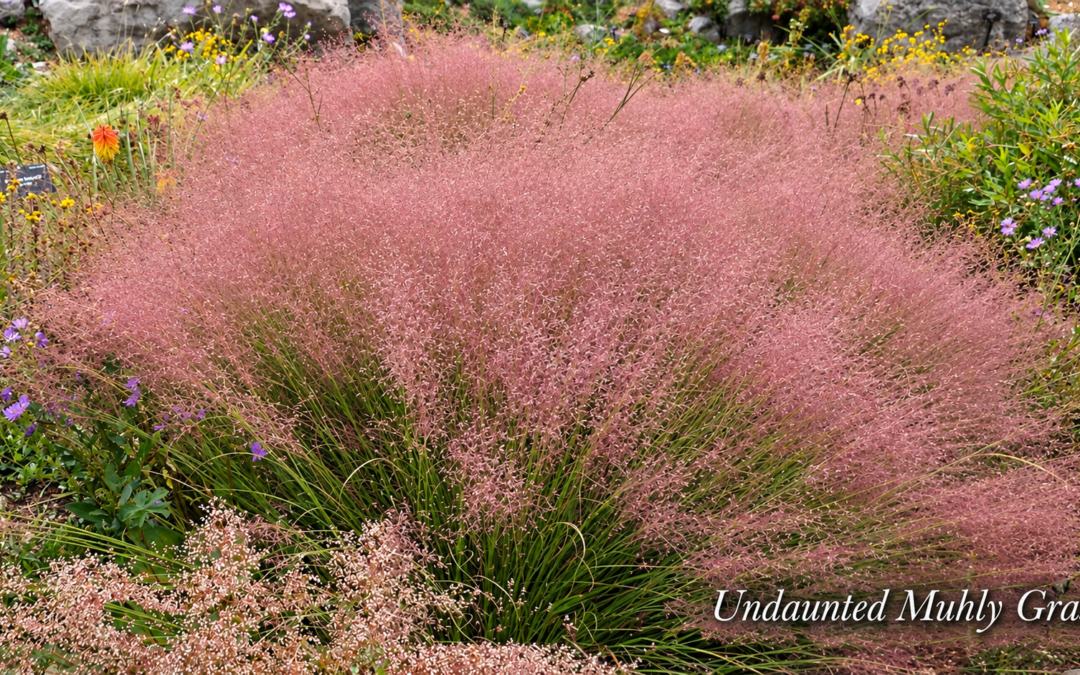
Some ornamental grasses spend the growing season blending into the background. Undaunted® Ruby Muhly waits until late summer and fall to steal the show. Its fine-textured foliage becomes the foundation for clouds of ruby-pink flowers that seem to float above the plant, especially when autumn sunlight shines through them.
For Colorado gardeners, this warm-season grass offers something especially appealing: spectacular fall color, good cold hardiness and modest water needs once established. It is a grass worth considering for sunny Front Range gardens, with one important qualification: it needs a sufficiently long, warm growing season to deliver its famous flower display.
October is a good time to appreciate its flowers and winter structure. Resist the urge to cut it back just because the blooms are fading. Those drying flower heads can continue contributing color and texture to the landscape well into winter.
Is Undaunted® Ruby Muhly a good choice for Colorado gardens?
Yes, particularly for sunny, lower-elevation gardens along the Front Range. Undaunted® Ruby Muhly is a long-lived, clump-forming ornamental grass selected for its attractive fall flowers, heat tolerance and relatively low water requirements. It has demonstrated good performance in Colorado gardens, including trials and plantings in the Fort Collins area.
However, cold hardiness and flowering performance are two different things. Although this grass is hardy in USDA Zones 5–10, higher-elevation gardeners may find that their growing season is too short or cool for a dependable flower display. Colorado Springs-area gardeners at higher elevations should be especially cautious about expecting the same results as gardeners in warmer locations.
The practical advice is simple: choose it for a sunny, warm location where you can enjoy the flowers, not merely because the plant can survive winter.
What is its botanical name?
Undaunted® Ruby Muhly Grass is botanically identified as Muhlenbergia reverchonii ‘PUND01S’. You may also see it labeled simply as Undaunted® Ruby Muhly or Ruby Muhly.
The cultivar was selected in 2003 by horticulturists Lauren Springer and Scott Ogden from a particularly robust population of the species in north-central Texas. The original wild population was subsequently lost to agricultural development, making this cultivated selection an important representative of that plant material.
Undaunted® is part of the Plant Select® program, which promotes plants suited to the challenging growing conditions of the Rocky Mountain region and adjacent high plains. Its combination of heat tolerance, cold hardiness and ornamental appeal makes it a particularly useful grass for Colorado landscapes.
Is Undaunted® Ruby Muhly native to Colorado?
No. The species Muhlenbergia reverchonii is native to Texas and Oklahoma, not Colorado. However, it is a North American native grass, and Undaunted® is a selected horticultural form of that species.
This distinction matters when planning a native garden. A plant can be native to North America without being native to Colorado. If your goal is to create a landscape using plants indigenous to our state, consider locally appropriate native grasses such as blue grama or little bluestem instead.
If your goal is a beautiful, water-conscious ornamental planting, Undaunted® Ruby Muhly deserves consideration on its own merits.
Plant facts at a glance
- Common name: Undaunted® Ruby Muhly Grass, Ruby Muhly.
- Botanical name: Muhlenbergia reverchonii ‘PUND01S’.
- Plant type: Deciduous, clump-forming, warm-season perennial grass.
- Native origin: Texas and Oklahoma.
- Typical size: Approximately 16–20 inches tall and 18–24 inches wide in many Colorado plant listings; flowering stems can reach roughly 30 inches or more under favorable conditions.
- Cold hardiness: USDA Zones 5–10.
- Light: Full sun.
- Soil: Adaptable to clay and loam, with drainage appropriate to the site.
- Water: Low to moderate once established.
- Flower color: Ruby-pink to reddish pink, eventually fading toward tan.
- Bloom season: Late summer into fall.
- Winter interest: Yes. Dried flower heads can remain attractive through winter.
- Maintenance: Cut back old growth in late winter or early spring before new growth begins.
These figures are general guidelines rather than guarantees. Plant size, bloom timing and winter performance vary with growing conditions. For additional information, consult Plant Select®: Undaunted Ruby Muhly Grass and the Colorado Springs Utilities Water Wise Plant Guide.
What makes its seasonal display different?
The foliage is attractive but relatively understated during much of the growing season. Its narrow, soft green to gray-green leaves form a rounded mound, creating a fine-textured contrast with broad-leaved perennials and shrubs.
The real performance begins in late summer and fall, when thousands of tiny reddish-pink flowers form an airy cloud above the foliage. Backlighting transforms the flower heads into a glowing haze of ruby and rose. This is a plant that rewards thoughtful placement. A position where the morning or late-afternoon sun shines through the flowers can make an ordinary border look extraordinary.
As temperatures drop, the flowers fade toward buff and tan. Rather than becoming an eyesore, the dried seed heads can continue to provide movement and winter interest. Snow and frost can make the plant especially attractive, although strong winds and heavy snow may alter its shape.
One word of caution: do not expect the same flowering performance every year. A cool summer, unfavorable exposure or a short growing season can delay flowering or reduce the display. Give this grass the sun and warmth it needs, and it has a much better chance of earning its reputation.
Where would it fit along the Front Range?
Start with a sunny border, a rock garden or a landscape bed that receives at least six hours of direct sunlight daily. Undaunted® Ruby Muhly is particularly effective where its late-season flowers can be viewed against a darker background or illuminated from behind.
It works beautifully as an accent plant, but don’t overlook the effect of planting several together. A small grouping can create a larger, more dramatic cloud of pink in autumn. For larger landscapes, mass plantings can soften the transition between shrubs, perennials and open space.
Despite its modest size, allow room for the mature clump. Many Colorado sources list a width of roughly two feet, while some growers report larger plants under favorable conditions. Follow the spacing guidance on the nursery label and leave enough room for the foliage and flower heads to develop without crowding neighboring plants.
Avoid placing it where taller plants will block the sunlight or where an overhanging shrub will hide its flowers. The goal is to make the flowering display visible, not bury it behind the garden’s supporting cast.
How do other Colorado regions change the choice?
On the lower Front Range, including much of the Denver and Fort Collins areas, this grass is a promising choice for sunny, warm sites. It is adapted to summer heat and can be a useful option for gardeners looking to reduce irrigation after establishment.
On the Eastern Plains, pay attention to exposure. Full sun is beneficial, but persistent wind can affect the appearance of the flower heads and increase moisture loss during establishment. Choose a site with adequate soil moisture while the plant develops its root system.
On the Western Slope, consider the local combination of heat, elevation, soil and irrigation. A warm valley garden may offer excellent conditions, but a cooler or exposed site may produce a less impressive fall display.
In mountain communities and at higher elevations, flowering is the principal concern. The plant may survive winter in an appropriate location yet fail to produce its characteristic cloud of ruby flowers before the growing season ends. Ask a local nursery or experienced gardener about flowering performance at a comparable elevation before investing in a large planting.
Soil and water: judge the combination
Undaunted® Ruby Muhly is adaptable to several soil types, including clay and loam. Plant Select® lists it for moderate-to-dry conditions and describes it as a low-water ornamental grass. That does not mean a newly planted grass should be left to fend for itself.
Water thoroughly after planting, then monitor the root ball and surrounding soil while the plant establishes. The original nursery container may dry out differently from the native soil around it, so check both areas rather than relying entirely on the appearance of the foliage.
Once established, the grass can tolerate relatively dry conditions. During prolonged hot, dry weather, occasional deep watering may still be beneficial, particularly in sandy soils or exposed locations. Avoid following a rigid watering schedule without considering rainfall, soil drainage and actual moisture levels.
Do not assume that every clay soil is unsuitable or that every sandy site will perform equally well. The key is to match the plant to the conditions you have and manage water according to what the soil tells you.
What wildlife and pollinator value does it offer?
Undaunted® Ruby Muhly is primarily valued for its ornamental flowers, fine texture and winter interest. It should not be promoted as a major pollinator plant without stronger species-specific evidence. Plant Select® does not list it as a pollinator-benefit plant.
Its grass clumps may contribute structure to a landscape, but if supporting bees and butterflies is a major objective, combine it with flowering perennials that have documented wildlife value and are appropriate for your site.
For a Colorado water-wise garden, consider locally suitable native grasses and flowering plants alongside ornamental selections. Choose companions with compatible sunlight and irrigation needs so that your garden’s wildlife value doesn’t come at the expense of a manageable watering routine.
What about deer, rabbits, pets and toxicity?
Plant Select® lists Undaunted® Ruby Muhly as deer resistant, and Colorado Springs Utilities reports that rabbits appear to leave it alone in its demonstration garden. Remember that resistance is not immunity. Deer and rabbits may browse plants when food is scarce or individual animals develop different feeding habits.
Reliable, species-specific pet toxicity information was not confirmed for this profile. Do not assume that the grass is safe to eat simply because it is an ornamental grass. If you have a pet that regularly chews garden plants, consult your veterinarian about any concerns.
Planting and establishment
Spring is generally the best time to plant this warm-season grass in Colorado. Planting early enough in the growing season gives the roots time to establish before winter and allows the plant to benefit from the warmth of summer.
Choose healthy nursery stock with the correct botanical name. Plant the crown at the appropriate soil level, water thoroughly and apply mulch sparingly around the root zone without burying the crown.
Give the plant full sun and enough room to develop its natural rounded form. During the first growing season, monitor soil moisture and water when necessary. Avoid excessive fertilization; overly lush growth is not the goal, and a heavy fertilizer program is rarely necessary for an established ornamental grass.
If you’re planting in autumn, consider your elevation and the amount of time remaining before the ground freezes. In colder or exposed locations, spring planting is the more conservative choice.
Pruning, maintenance and Colorado problems
Leave the attractive flower heads standing through winter unless site conditions or fire-mitigation requirements call for earlier removal. The dried foliage and seed heads provide seasonal interest that would be lost if the plant were cut back in autumn. The same selective approach to fall cleanup applies here as it does across the rest of the garden.
In late winter or early spring, cut the previous year’s growth back close to the ground before new shoots begin to emerge. Take care not to damage the new growth at the base of the clump. A pair of sharp hand pruners works well for small plants; larger plantings may require more substantial tools.
If the center of the plant begins to open up, or the clump becomes less vigorous, assess its age, growing conditions and overall health. Division or replacement may eventually be appropriate, but do not assume every thinning grass needs immediate division.
For fire-exposed properties, follow local mitigation recommendations. Dried ornamental grass foliage can contribute to combustible material near structures, so winter display should never take precedence over defensible-space requirements.
Companions and design uses
Undaunted® Ruby Muhly looks especially good alongside plants that provide contrasting foliage, form or fall color. Its soft mound and airy flower heads can complement upright grasses, compact shrubs and autumn-flowering perennials.
Consider asters, suitable coneflowers, or other late-season flowering perennials for a colorful autumn combination. Blue grama and little bluestem can also provide interesting textural contrasts where their growing requirements match the site.
For a more dramatic effect, repeat the grass in small groups through a sunny border. The repeated pink clouds create a visual connection between different areas of the garden. For a smaller landscape, a single well-positioned clump can serve as a seasonal focal point.
Remember that compatible water requirements matter more than color combinations. A beautiful grouping is easier to maintain when its plants can share the same irrigation schedule.
Who should choose it, and who should pass?
Choose Undaunted® Ruby Muhly if you want a fine-textured, low-water ornamental grass with an exceptional late-season flower display. It is particularly promising for sunny, lower-elevation Colorado gardens where summer warmth supports reliable flowering.
Think twice if your garden is heavily shaded, your growing season is short, or you need a grass guaranteed to flower spectacularly at high elevation. If you want a plant that is indigenous to Colorado, remember that this selection comes from a species native to Texas and Oklahoma.
The practical recommendation is straightforward: Undaunted® Ruby Muhly earns its place in many Colorado landscapes because it combines attractive foliage, ruby-pink fall flowers, cold hardiness and modest water needs. Its success depends on matching the plant to the site rather than expecting every ornamental grass to perform everywhere.
Before buying, stand in the proposed planting location and ask four questions: Does it receive enough sun? Is the growing season warm and long enough? Can I provide water during establishment? Will the fall flowers be visible from where I spend time in the garden? If the answers are yes, Undaunted® Ruby Muhly may be just the grass your autumn landscape is missing.
Sources
- Plant Select®: Undaunted Ruby Muhly Grass
- Colorado Springs Utilities: Undaunted Ruby Muhly Water Wise Plant Guide
- CSU Extension: Native Grasses for Colorado Landscapes
Keep growing with Garden WiseGuy
Get the Garden Wise Journal. Join Keith Funk for practical Colorado gardening guidance, seasonal reminders, and useful ideas that fit real yards.
Sign upFrom The Garden Newsletter
Get show updates, garden tips, and special offers for Garden Wise Guy listeners.
A little garden humor for the off-season. See The Gardenfather T-shirt for plant lovers and master gardeners.
Related Garden WiseGuy reading
- Korean Feather Reed Grass in Colorado: Soft Plumes for the Right Site
- Blue Mist Spirea: A Colorado Plant Personality Profile
- Russian Sage: Colorado’s Lavender-Blue Garden Superstar
- Monthly Tips
Keep Growing with the Garden Wise Guy
Colorado gardening does not have to be complicated. Get practical, no-nonsense advice from Keith Funk to help you choose better plants, avoid costly mistakes, and grow a healthier landscape in every season.
Follow Keith Funk
Stay connected for seasonal tips, practical plant advice, radio show updates, and more Colorado gardening wisdom.
Live the Garden Life
Gardening is more than a hobby. It is a way of life. Visit GardenLife for garden-inspired tees, caps, and gear created for people who would rather be outside growing something.
Keep learning. Keep planting. Keep growing wiser.