
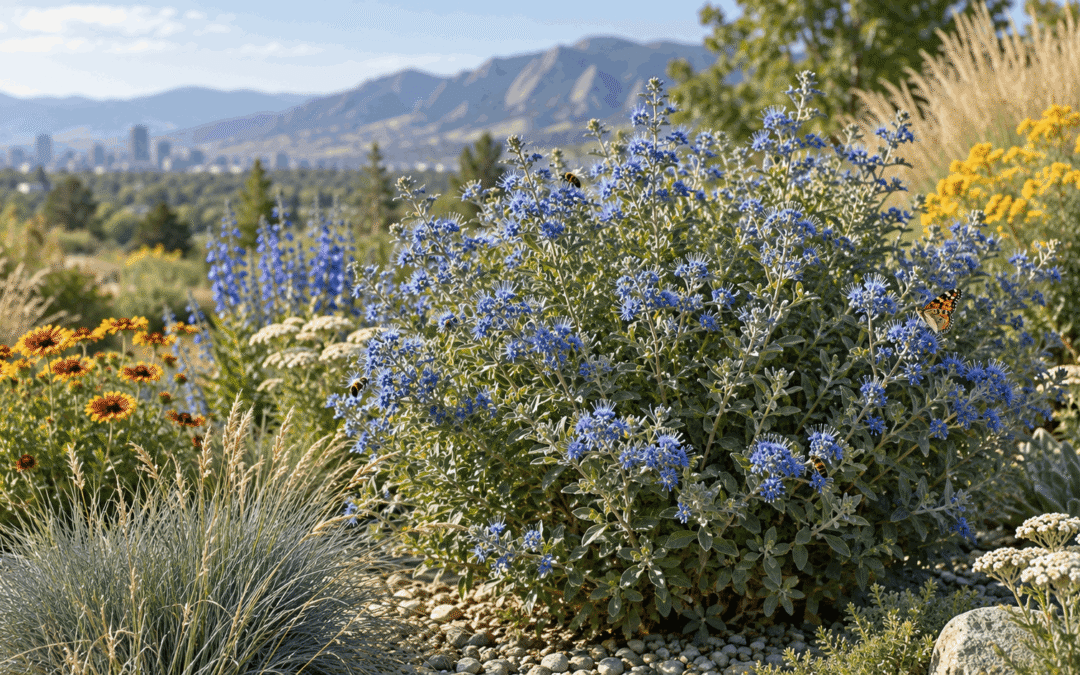
Blue mist spirea is the late guest who arrives after everyone assumed the garden party was over. Its hazy blue flowers open from late summer into early fall, just when many Front Range beds are running out of fresh color.
It is compact, fairly water-wise after establishment and popular with bees. It also comes with a misleading name, a need for sharp drainage and a pruning schedule that beginners often get backward.
What is blue mist spirea?
Blue mist spirea is a small deciduous hybrid shrub or subshrub grown for blue late-season flowers. Its botanical name is Caryopteris × clandonensis. It belongs to the mint family, not the true spirea genus, and it flowers on new growth.
- Common names: blue mist spirea, bluebeard and blue mist shrub
- Botanical name: Caryopteris × clandonensis
- Plant type: deciduous shrub or woody subshrub
- Native status: not native to Colorado or North America; it is a garden hybrid derived from Asian species
- Typical zones: generally USDA Zones 5 through 9, with cultivar and site differences
- Typical size: about 2 to 4 feet tall and wide
Do not confuse it with blue mist penstemon, Penstemon virens, which is a different plant and is native to parts of Colorado.
Where does it grow well in Colorado?
It performs best in sunny, warm and well-drained Front Range sites. It suits many Denver-area landscapes when soil drains freely and winter wetness does not sit around the crown. Colder mountain locations and exposed sites may experience dieback or unreliable survival.
Along the lower Front Range, place it where it receives six or more hours of direct sun. A reflected-heat site can increase water demand, but a cold, soggy pocket is worse. In dense clay, choose a raised or sloped location and avoid overwatering.
Western Slope gardeners need establishment water. Eastern Plains gardeners should protect it from wind. Lower areas in southern Colorado may suit it, while mountain gardeners should favor a protected microclimate or a hardier shrub.
What sun, soil and water does it need?
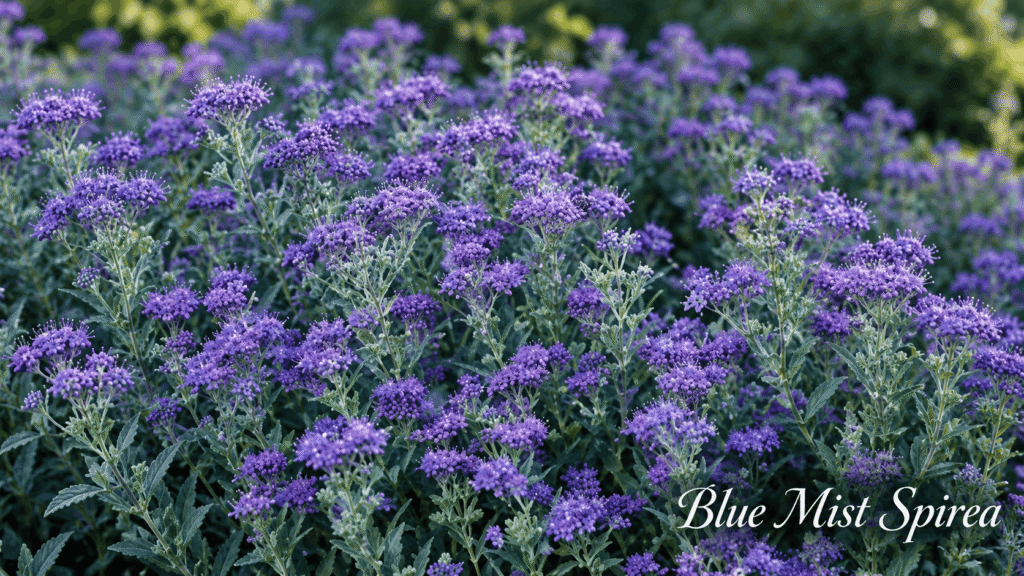
Give blue mist spirea full sun, sharp drainage and moderate establishment water. Once rooted, it tolerates dry conditions better than many traditional flowering shrubs. It does not tolerate a crown that stays wet, especially through winter.
- Sun: full sun for the strongest growth and flowering
- Soil: well-drained soil; avoid waterlogged clay pockets
- Soil reaction: adaptable, including many alkaline Colorado soils, if drainage is adequate
- Water: regular during establishment, then low to moderate depending on heat, exposure and soil
Water deeply, then allow the upper soil to begin drying. Frequent shallow irrigation creates weak surface roots and raises crown-rot risk. Group it with plants that prefer similar water rather than placing it beside a thirsty lawn.
What does it offer through the seasons?
Spring begins quietly. New shoots emerge from older stems or the crown. The gray-green foliage forms a rounded mound and may release a mild fragrance when brushed.
From late summer into early fall, clusters of blue flowers cover the new growth. Bloom timing varies with cultivar, elevation, weather and exposure. The blue color pairs especially well with yellow flowers, warm grasses and silver foliage.
After frost, the plant becomes twiggy. Some top growth may die back. Wait for spring growth before deciding what survived.
Does blue mist spirea help pollinators?
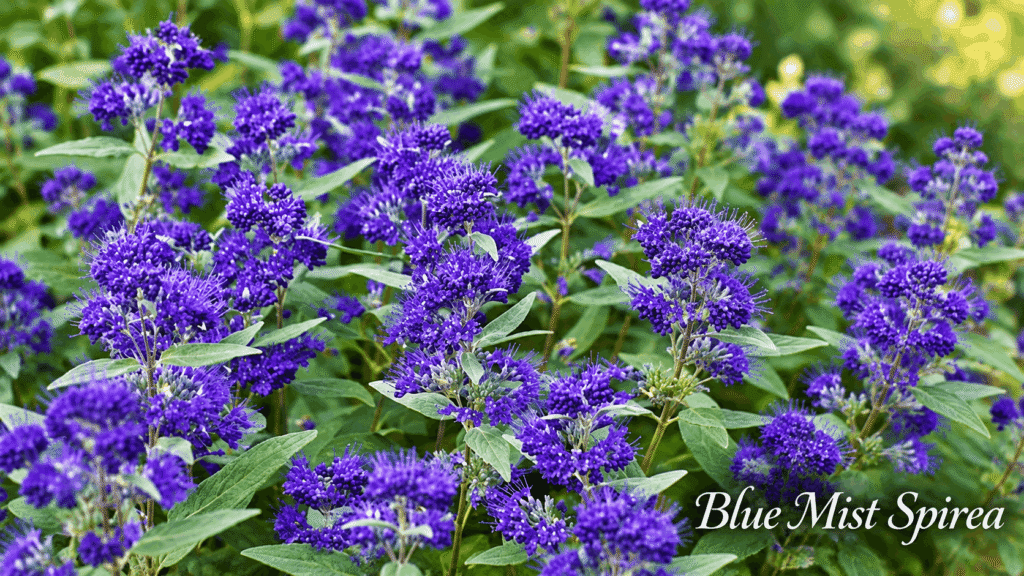
Yes, its late flowers attract bees, butterflies and other pollinating insects. The timing is valuable because fewer woody plants bloom late in the season. It is not a native host plant substitute, so combine it with Colorado-adapted native plants for broader ecological value.
Avoid spraying open flowers with insecticides. Provide blooms from spring through fall, some bare soil for ground-nesting bees and pesticide-free shelter. One popular pollinator shrub is helpful. A connected habitat is better.
What about deer, rabbits and toxicity?
Blue mist spirea is often described as deer resistant, but resistant does not mean deer proof. Aromatic foliage may reduce browsing, while hungry deer and rabbits may still sample young growth. Protect new plants where animal pressure is heavy.
Toxicity: Reliable, species-specific toxicology information is limited and common references do not consistently classify this hybrid. Do not represent it as edible. Keep children and pets from chewing garden plants, and contact a veterinarian, physician or poison-control service if ingestion causes concern.
How should it be planted?
Plant in spring or early fall, with spring safer in cold sites. Dig no deeper than the root ball and two to three times as wide. Set the crown at grade or slightly high in clay. Backfill, water and mulch without covering the crown. Space for the cultivar’s mature width.
How and when should blue mist spirea be pruned?
Prune in early spring because blue mist spirea flowers on new growth. Wait until the worst cold has passed and growth is beginning to show. Remove dead wood, then shorten living stems to build a compact framework suited to the cultivar and site.
PlantTalk Colorado specifically groups blue mist spirea with summer-blooming shrubs that should be pruned in early spring. Do not shear it hard in fall. Old stems help catch snow and give you clues about winter survival.
In cold sites, stems may die close to the ground. Cut back to healthy wood once you can see where buds are swelling. Avoid assuming every stem is dead during the first warm week.
What problems appear in Colorado?
- Winter dieback: common after severe cold, rapid temperature changes or exposed conditions.
- Crown or root rot: likely in poorly drained soil or with frequent irrigation.
- Weak flowering: often caused by too much shade, excess nitrogen or improper pruning.
- Short life: possible in heavy, wet sites even when the plant is nominally hardy.
- Wind damage: reduced by a protected but sunny location.
Blue mist spirea is generally not a high-maintenance pest plant. Drainage and pruning timing cause more trouble than insects. Before treating a mystery symptom, check the crown, soil moisture and recent weather.
What are good companion plants?
Pair it with plants that like sun, drainage and moderate to low water after establishment. Good design partners can include blue grama, little bluestem, blanket flower, Rocky Mountain penstemon, rabbitbrush, yarrow, catmint and late-blooming asters suited to your site.
Use native companions to add host-plant value. Keep irrigation zones sensible. A low-water shrub in a thirsty bed is not a water-wise design.
Why does Keith recommend it?
Blue mist spirea earns its space with late blue color, a pollinator crowd and a manageable size. It fits many sunny Front Range beds without demanding the water of thirstier flowering shrubs.
It also teaches three useful Colorado lessons: drainage matters, fall cleanup can wait and a common name may be botanically suspicious. Any plant that blooms beautifully while reminding us to read the label is doing double duty.
Who should not choose it?
Skip it if your site stays wet, receives little sun or sits in a severely exposed cold pocket. Mountain gardeners outside its dependable hardiness range should choose a tougher locally proven shrub. Gardeners who need a Colorado native should choose something else.
It is also a poor fit where irrigation keeps the crown continually moist. Do not force it into a lawn watering zone and then blame Colorado when it declines.
Keep growing with Garden Wise Guy
Get the Garden Wise Journal. Receive more Plant Personality Profiles and practical Colorado garden advice from Keith Funk.
Sign up:
From The Garden Newsletter
Get show updates, garden tips, and special offers for Garden Wise Guy listeners.
For gardeners with leading-role energy. See The Gardenfather T-shirt.
Related Garden WiseGuy reading
Sources
- PlantTalk Colorado: Pruning Shrubs
- Colorado Master Gardener: High and Dry Garden Plant List
- Missouri Botanical Garden: Caryopteris × clandonensis ‘Blue Mist’