
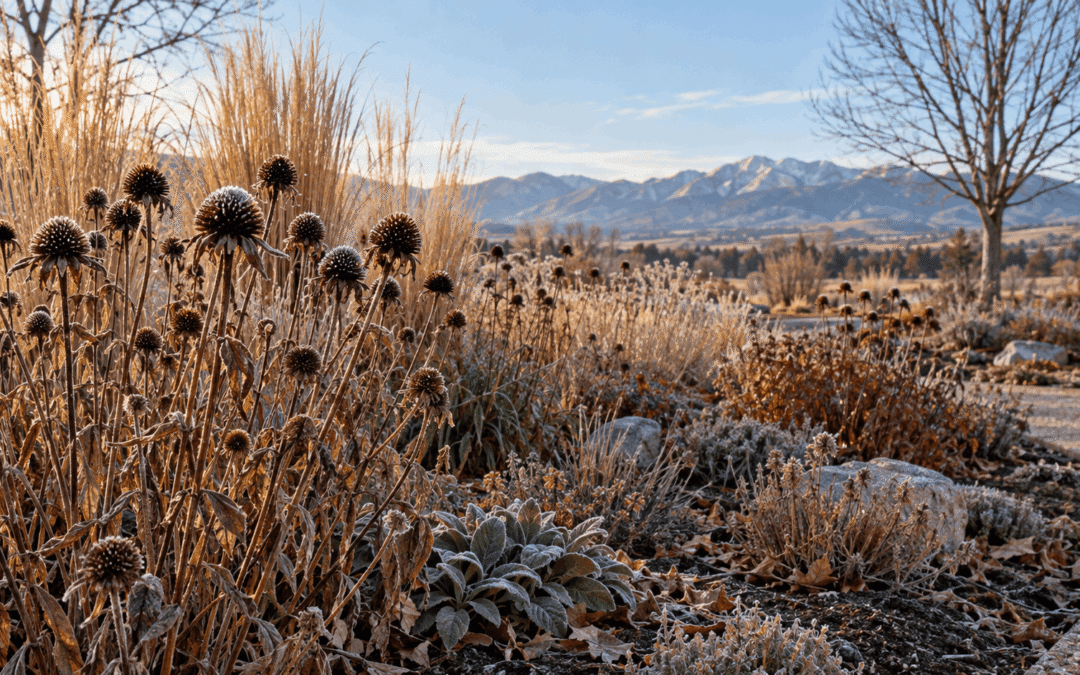
The garden looks tired. A frost has browned the flowers, leaves have collected between the stems, and you would like one clear instruction before putting the tools away. “Cut it all down” sounds wonderfully efficient.
It is also a poor rule for a mixed Colorado garden. Cutting back perennials in fall should depend on the plant, its health and its location. Some cleanup is useful. Some can wait. Some removes the very thing you wanted the planting to contribute through winter.
The better question is not whether you are a tidy gardener or a wildlife gardener. Ask what each plant is doing now, what problem you are trying to solve and whether the proposed cut helps. That gives you a plan you can explain to the neighbor looking over the fence.
Should all perennials be cut to the ground in fall?
No. Identify the plant, check its health and consider its location before cutting. Sound stems and seed heads can remain where they provide useful structure and habitat. Remove diseased material or growth creating a practical hazard. Leave plants with persistent foliage or woody bases until their specific care needs are clear.
Brown is a color, not a complete care instruction. A finished flower stalk, a dormant grass and a woody branch may all look brown. They are not interchangeable. Your pruners should not be the tool you use to find out which is which.
Why does the cut everything rule sound so sensible?
It produces a quick visual result. You can see exactly where you worked, the bed looks consistent and the bag of debris feels like evidence of accomplishment. It also fits the way we treat spent vegetables and annual flowers.
The trouble begins when one useful cleanup practice becomes a rule for every plant. Removing finished tomato vines does not establish the right treatment for a grass clump. Trimming a stalk out of a path does not prove that every stalk needs trimming.
There is another practical reason the rule persists. Many gardeners inherit a maintenance routine without inheriting the plant list. If you do not know what is in a bed, uniform cutting feels simpler than identification. The solution is to build the plant list, not sharpen the guess.
What does leaving healthy stems accomplish?
Standing perennials preserve shape in the winter garden and can retain seed resources or shelter. CSU Arapahoe County: To Cut Back or Not to Cut Back describes these benefits in Colorado plantings. The value depends on what remains, where it stands and whether it is healthy enough to keep.
Use that as a reason to observe, rather than a demand that everything stay untouched. Watch which seed heads birds use. Notice which stems remain upright and which collapse across the path. You will build a more useful cleanup routine from your own garden’s behavior.
Do not promise that every ornamental perennial feeds native bees or that every grass supplies meaningful seed. Wildlife value differs by species. Keep a range of appropriate plants and consult local habitat guidance when supporting particular insects or birds is your goal.
Colorado conditions make the decision more specific
A planting beside an exposed Front Range driveway has different concerns from one in a sheltered courtyard. Wind, drifting snow and daily access can change what is practical to leave. Start with the bed’s actual conditions instead of copying an image of a winter meadow.
In a mountain garden, the stems you cut now may soon be concealed beneath snow. At a lower exposed site, the same bed may remain visible and wind swept. Neither situation creates a universal answer. It changes which questions are worth asking.
The date is equally unreliable as a statewide trigger. By November, some Colorado plants have been dormant for weeks, while protected lower sites may still hold living foliage. Identify the plant and its condition before using the month as permission to cut.
What should you remove in fall?
Remove clearly diseased material when its proper management calls for sanitation. Clear blocked paths, drains and other access points. Deal with plants spreading seed where you cannot manage the seedlings. Keep these decisions targeted, and obtain identification help if you are unsure whether a symptom indicates disease.
A whole bed does not need stripping because one plant has a problem. Photograph the affected plant before removal. Note whether the issue appeared early or late, whether neighboring plants showed it and what care changed during the season.
For disposal, do not assume a cool home compost pile will handle every pathogen. Check the guidance for the identified problem and your local collection rules. Do not place suspect material into a future bed simply to avoid deciding where it belongs.
Which plants need you to pause before cutting?
Ornamental grasses are a useful example. CSU Extension: Ornamental Grasses describes leaving grasses for winter interest and commonly cutting back before spring growth, while also identifying the combustibility of dried foliage. Plant type and location belong in the same decision.
A perennial with green leaves near the soil needs another kind of attention. Removing an old flower stalk is different from shaving off the entire base. Look closely enough to distinguish the two, and find a reliable reference for that plant.
Woody and partly woody plants also need individual guidance. Use the Blue Mist Spirea Colorado Plant Personality Profile as a reminder that a plant commonly included in a perennial border may have a specific pruning schedule. The border is a design category, not a guarantee of identical biology.
Fire exposure changes what is sensible to leave
Dry stems beside a structure deserve a different assessment from stems in a suitable habitat area farther away. If your property has wildfire exposure, use the Colorado State Forest Service: Protect Your Home and Property and local fire district guidance to set the cleanup plan.
Do not interpret habitat advice as a reason to retain combustible material against siding, under decks or where embers could collect. Choose safer locations for retained structure. When in doubt, ask for a property specific mitigation assessment.
This is also a design opportunity. Next spring, reconsider where large grass clumps or dense perennial masses belong. A plant can be attractive and still be in the wrong position. Moving the future planting is often a better long term answer than arguing with the same conflict every November.
How do you keep a partly standing garden looking intentional?
Clear the path edges. Remove litter. Keep markers readable and leave the strongest plant forms where they can be seen. Selective cleanup looks purposeful when the essential access and maintenance work is done.
You do not need a sign explaining every stem. A defined edge and a few repeated plant shapes can make the seasonal planting easier to read. If a particular plant always collapses, record that observation and consider a better location or replacement next year.
For leaves, use the truth about fall leaves in Colorado garden beds to distinguish useful retained material from a heavy problem layer. Leaves, stems and mulch should be evaluated together. Saving one does not mean piling the other two over every crown.
What can beginners do this week?
Choose one small bed, identify its plants and photograph it before cutting. Remove clear hazards and known problem material. Leave a few healthy, sturdy plants standing where appropriate, then watch how they perform through winter. Record the results so next year’s cleanup reflects your garden rather than a blanket rule.
Make a short note beside each plant name: leave, remove problem growth or research. If you cannot identify something, photograph the whole plant and its base. Send those details to a knowledgeable local nursery or Extension office rather than relying on a cropped image of one dead leaf.
You can complete the rest of the property in stages. There is no need to settle every plant question during the same afternoon. Put the unresolved ones somewhere you can find them again.
What happens when spring arrives?
Recheck the planting before cutting retained stems. Look for emerging growth, occupied stems and the individual plant’s care needs. There is no single statewide date or temperature that guarantees every overwintering insect has left every stem.
If you retain cut stems for habitat, place them in a suitable sheltered location where they will not become a fire or access problem. Do not keep moving or shredding material while assuming it still serves the same purpose.
Use the winter observations to improve the next season. Which plants held their shape? Which caused trouble? Which did you enjoy seeing from indoors? Good cleanup is a continuing adjustment between plant health, habitat, safety and how you use the garden. A uniform haircut cannot make those decisions for you.
Sources
- CSU Arapahoe County: To Cut Back or Not to Cut Back
- CSU Extension: Ornamental Grasses
- Colorado State Forest Service: Protect Your Home and Property
- CSU Extension: Fall Vegetable Garden Clean Up
Keep growing with Garden Wise Guy
Get the Garden Wise Journal. Join Keith Funk for practical Colorado gardening guidance, seasonal reminders, and useful ideas that fit real yards.
Sign upFrom The Garden Newsletter
Get show updates, garden tips, and special offers for Garden Wise Guy listeners.
A little garden humor for the off-season. See The Gardenfather T-shirt for plant lovers and master gardeners.
Related Garden WiseGuy reading
- September Lawn and Garden Tips for Colorado
- Russian Sage: Colorado’s Lavender-Blue Garden Superstar
- Monthly Tips
Keep Growing with the Garden Wise Guy
Colorado gardening does not have to be complicated. Get practical, no-nonsense advice from Keith Funk to help you choose better plants, avoid costly mistakes, and grow a healthier landscape in every season.
Follow Keith Funk
Stay connected for seasonal tips, practical plant advice, radio show updates, and more Colorado gardening wisdom.
Live the Garden Life
Gardening is more than a hobby. It is a way of life. Visit GardenLife for garden-inspired tees, caps, and gear created for people who would rather be outside growing something.
Keep learning. Keep planting. Keep growing wiser.