
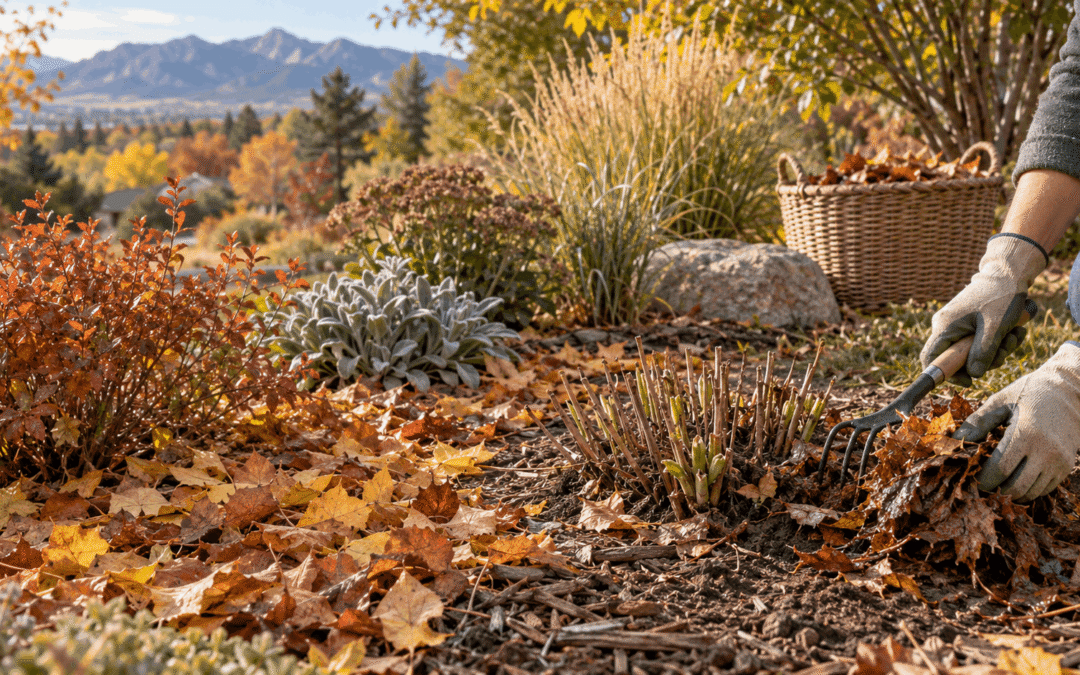
Here is the myth: every leaf must be removed from every garden bed before winter. If one leaf remains, the garden police arrive, write a citation and confiscate your rake.
The truth is more useful. Clean, healthy leaves can protect soil, conserve moisture and support insects. Heavy mats, diseased leaves and leaves packed against crowns can cause problems. The right move is selective cleanup, not a bare-earth beauty contest.
Do fall leaves always need to be removed from garden beds?
No. A loose layer of clean leaves can serve as natural mulch and habitat. Move or reduce leaves when they form dense mats, bury small plants, stay wet against crowns, blow into drains or carry serious disease. Match the treatment to the leaf, bed and Colorado microclimate.
Why do people believe this myth?
For decades, a “finished” fall landscape meant bare beds, short stems and bags lined up at the curb. Cleanup also solves real problems on lawns and in formal spaces, so the rule spread to every corner of the yard.
There is also a grain of truth beneath the myth. Thick leaf mats can block light, hold moisture and smother low plants. Diseased debris can preserve some pathogens. Wind can move leaves into gutters, storm drains, neighboring yards and fire-prone areas.
The mistake is turning those exceptions into a universal command. A few leaves under shrubs are not the same as six inches of wet cottonwood leaves plastered over a small evergreen groundcover.
What is the Colorado-specific truth?
Colorado’s low humidity, wind, thin snow cover and repeated freezing and thawing can dry and expose soil. A modest layer of leaves can reduce evaporation and buffer temperature changes. That can be useful along the Front Range, especially in exposed perennial and shrub beds.
Leaves also return organic material to soil as they break down. This is helpful where development has left compacted, low-organic-matter soil. It is not an instant cure for clay, but it supports the slow biological work that improves the soil surface.
Colorado wind changes the plan. Large, whole leaves may not stay where you put them. Moisten them lightly, contain them beneath shrubs, combine them with coarser mulch or move them into a compost enclosure. Do not send them into the street, where they can clog drainage systems.
What should gardeners do instead?
Sort leaves by condition and location. Leave a light, loose layer in suitable beds. Move thick piles away from plant crowns and tiny evergreen plants. Mulch-mow light leaves on turf. Compost clean excess leaves. Dispose of diseased material through an accepted local method.
- Leave: clean, loose leaves under established shrubs and among sturdy perennials.
- Redistribute: drifts that pile against fences, walls, trunks or crowns.
- Mulch-mow: a light lawn covering when the grass remains visible afterward.
- Compost: clean surplus leaves with moisture and nitrogen-rich green material.
- Remove: diseased foliage, invasive seed heads and dense mats that smother plants.
PlantTalk Colorado calls fall leaves a valuable resource and explains that they are rich in carbon. A managed compost pile needs adequate moisture, oxygen and a nitrogen source. In Colorado’s dry air, a forgotten pile may simply become a very patient pile.
When are leaf removal exceptions important?
Remove leaves from lawns when they form a thick layer. Turf still needs light and air. Move leaves away from drainage channels, sidewalks and places where they create a slipping hazard.
Be more aggressive with leaves from plants affected by certain diseases, especially when the disease is known to overwinter in fallen tissue. If you are unsure, identify the problem through a local Extension office before adding material to a home compost pile that may never become hot enough to destroy pathogens.
Keep leaves from packing tightly around the crowns of alpine, succulent and other moisture-sensitive plants. In irrigated or shaded beds, wet mats can encourage rot. Near structures in fire-prone areas, follow local defensible-space guidance rather than treating leaf litter as harmless mulch.
Black walnut leaves deserve nuance too. Small amounts can be composted, but avoid using fresh material heavily around sensitive plants. When in doubt, compost separately and allow ample decomposition.
How do Colorado regions change the answer?
Dry, windy regions benefit from soil cover but need containment. Front Range and Eastern Plains gardeners may need to anchor or chop leaves. Mountain gardeners must consider wildfire guidance and shorter decomposition seasons. Western Slope and southern Colorado gardeners should adjust for local dryness, irrigation and fire risk.
In Denver and many Front Range neighborhoods, use leaves under established plantings where they will not blow away. On the Eastern Plains, whole leaves may migrate to Nebraska before lunch, so compost bins or heavier mulch caps help.
Mountain communities should prioritize local fire mitigation rules near buildings. A remote woodland bed and the first five feet around a home do not have the same job. On the Western Slope and in southern Colorado, arid conditions may slow breakdown, so chop only enough to keep leaves in place without creating a dense, airless mat.
Can leaves replace all mulch?
Sometimes they can cover part of the job, but they are not identical to wood chips. Leaves decompose faster, shift in wind and can mat. Coarse wood mulch lasts longer and allows better air movement. A thin leaf layer beneath coarse mulch can work well around many established shrubs.
Keep any organic mulch away from trunks and crowns. Mulch protects roots. It should not keep bark constantly damp or hide the base of the plant.
The Garden WiseGuy verdict
Myth busted: Colorado gardeners do not need to remove every fall leaf from every bed. Keep useful, healthy leaves where they protect soil and habitat. Move, compost or discard leaves when they smother plants, spread disease, create hazards or conflict with fire-safety guidance.
The goal is not “leave everything” or “remove everything.” The goal is to put the right leaf in the right place. That is less dramatic than a universal rule, but it is much better gardening.
Keep growing with Garden Wise Guy
Get the Garden Wise Journal. Join Keith Funk for practical Colorado myth busting and seasonal guidance.
Sign up
From The Garden Newsletter
Get show updates, garden tips, and special offers for Garden Wise Guy listeners.
Give your rake a coffee break. Browse The Gardenfather T-shirt.
Related Garden WiseGuy reading
Sources
- PlantTalk Colorado: Composting Fall Leaves
- Colorado State University Extension: Fall and Winter Watering of Plants and Trees