
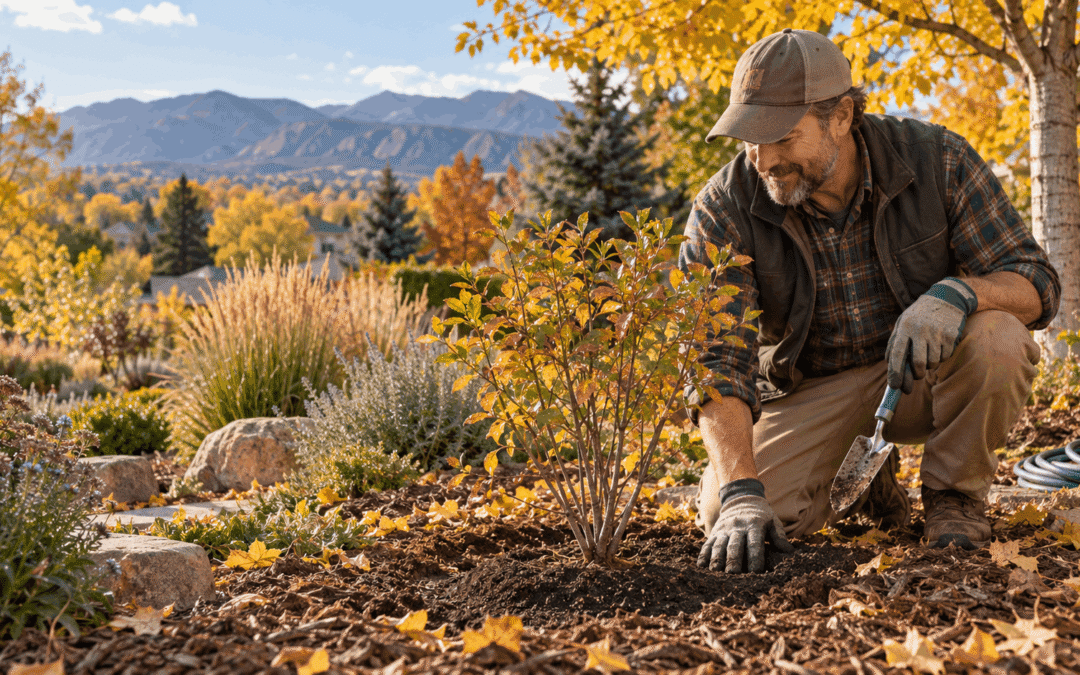
October along the Denver and Front Range corridor is not the end of gardening. It is the month when the show moves underground. Cooler air slows top growth, but soil often stays warm enough for roots to keep working.
That makes this a useful planting window, but not a permission slip to plant anything anywhere. Colorado’s dry air, alkaline clay, wind and sudden freezes can turn a good idea into expensive compost. The trick is to work with the weather you have, not the calendar you wish you had.
What should Colorado gardeners do first this month?
Start with moisture, not mulch or pruning. Check the soil around recently planted trees, shrubs and perennials. If the root zone is dry, water slowly and deeply before the ground freezes. Then finish planting hardy material, add mulch correctly and prepare hoses and irrigation systems for cold nights.
Push a screwdriver or narrow trowel into the soil several inches away from the crown. If the soil is cool and lightly moist, leave it alone. If it is hard, dusty or dry several inches down, give the root zone a slow drink.
New plants deserve first attention because their roots still occupy a small volume of soil. Evergreens, plants near warm south or west walls and anything exposed to wind also dry faster. Colorado State University Extension recommends supplemental fall and winter water during extended dry periods, only when the air and soil are above 40 degrees and the ground is not snow covered.
Why October root care matters on the Front Range
Roots do not read frost headlines. A cold night may end tomato season while the soil several inches down remains workable. Hardy trees, shrubs and perennials can continue making roots until soil temperatures become too cold.
That head start matters in Denver’s semi-arid climate. A plant entering winter with moist soil and some new root growth is better prepared for low humidity, dry wind and freeze-thaw cycles. A thirsty plant can look fine in March and still show damage when spring heat arrives.
Front Range clay adds another wrinkle. It holds water well but accepts it slowly. Watering too fast sends water down the sidewalk. Planting into a deep bowl of amended soil can also create a bathtub that stays wet. Improve a broad area modestly when needed, preserve the soil grade and never bury a tree’s root flare.
What can you plant in October?
Choose hardy plants and leave time for roots. Early October can still work for many container-grown trees, shrubs and perennials along the lower Front Range. The later the month gets, the more selective you should become. Avoid planting into frozen soil or immediately before a severe cold snap.
Spring-flowering bulbs belong near the top of the list. Tulips, daffodils, crocus and ornamental onions need fall planting. CSU identifies September and October as the best general window, while also warning that timing and soil conditions matter. Plant in well-drained soil with the pointed end up, then water to settle the soil.
In heavy clay, follow the package depth and avoid digging deeper than necessary. Do not automatically add bone meal. Many Colorado soils are alkaline, and CSU notes that bone-meal phosphorus is not readily available when soil pH is above 7. A soil test is a better shopping adviser than garden folklore.
Cold-hardy garlic can also go into prepared vegetable beds in fall. Choose sound cloves, use a sunny, well-drained site and protect the bed with mulch after the soil cools. Do not place garlic where onions, garlic or leeks recently struggled with disease.
How should you plant a tree or shrub now?
Dig wide, plant high enough and keep the trunk dry. The root flare should sit at or slightly above the surrounding grade, never buried under soil or mulch. Remove container defects, loosen circling roots as appropriate and spread mulch over the root zone without building a volcano around the stem.
Make the planting hole broad and no deeper than the root ball. In dense Front Range clay, a slightly high placement is safer than a sunken root ball. Backfill mainly with the native soil. A sharply different pocket of rich material can discourage roots from moving into the surrounding ground.
Water the entire root ball and nearby backfill slowly. Check again after the soil settles. Staking is not automatic. Use it only when the root ball cannot remain stable, and remove supports after the tree can stand on its own.
Add two to four inches of coarse organic mulch over a broad area, keeping it several inches away from trunks and crowns. Mulch limits evaporation and softens temperature swings. It should look like a doughnut, not a volcano. The tree is not asking to be tucked into bed up to its chin.
How often should landscapes be watered this season?
Water by soil condition and weather, not a fixed weekly alarm. During a dry October, inspect new plants at least weekly and established plants every couple of weeks. Water only when the root zone needs it. Continue winter checks during snow-free dry periods, usually once or twice a month when conditions allow.
CSU’s survival guideline for a newly planted tree is about 10 gallons per inch of trunk diameter per watering. Newly planted shrubs may need about five gallons twice a month in dry winter conditions. Those are starting points, not orders to water saturated clay. Subtract useful rain and snow.
Apply water slowly under the canopy and across the root zone. Midday watering is best once cold weather settles in because water can soak in before nighttime freezing. Never water frozen ground, over snow cover or when air temperatures remain below 40 degrees.
Turn off and winterize automatic systems before a damaging freeze, but do not confuse shutting down irrigation with declaring the landscape self-sufficient. Keep a drainable hose, watering wand or bucket ready for warm, dry winter days.
How does elevation change the timing?
Higher elevation usually shortens the planting window and increases exposure. Mountain communities may have frozen soil and persistent snow while Denver still has workable beds. Lower and warmer areas of southern Colorado may have more time. Use soil condition, recent weather and the plant’s hardiness rather than one statewide date.
Along the Front Range, elevation, slope and development create neighborhood-sized differences. A protected Denver courtyard may stay warm longer than an open site near Monument. A north-facing bed may cool earlier than a south-facing foundation bed, although that warm south wall can also push bulbs or plants into premature growth.
On the Western Slope, valley sites can retain fall warmth, but irrigation water may be shut off and cold air can pool in low spots. Mountain gardeners should favor spring planting for borderline plants and avoid late work in frozen soil. Eastern Plains gardeners must account for stronger wind and faster drying. Southern Colorado gardeners should still watch nighttime lows and local water rules rather than assuming “south” means frost-free.
What should beginners avoid doing right now?
Avoid panic pruning, automatic fertilizing and planting tender bargains. Do not cut every perennial to the ground simply because the first freeze arrived. Do not push soft new growth with high-nitrogen fertilizer. Do not buy a marginally hardy plant without a plan for your site and elevation.
- Do not top trees or make flush cuts.
- Do not bury crowns, trunks or root flares.
- Do not pile mulch against bark.
- Do not leave leaves matted over turf or diseased plants.
- Do not keep watering on a summer schedule after growth slows.
- Do not stop checking soil just because the irrigation clock is off.
Wait until early spring to prune blue mist spirea and other summer-blooming shrubs that flower on new growth. Leave sound perennial stems and seed heads when they add winter interest or shelter beneficial insects. Remove diseased material and anything likely to fall, rub or cause injury.
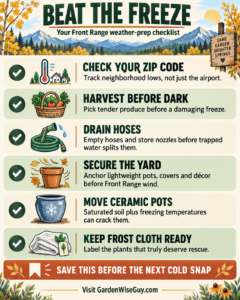 A practical Colorado fall garden checklist
- Check soil moisture around new plants, evergreens, and exposed beds.
- Plant spring bulbs while soil remains workable.
- Finish hardy tree and shrub planting early enough for root growth.
- Water new plantings thoroughly and recheck after settling.
- Apply mulch over the root zone, away from stems and trunks.
- Harvest warm-season vegetables before damaging cold.
- Remove diseased debris, but leave useful, clean habitat where appropriate.
- Drain hoses and winterize irrigation components.
- Store pesticides, fertilizers, and potting mixes where they will stay dry and secure.
- Keep a simple winter-watering plan near the calendar.
What can wait until spring?
Most major pruning can wait. So can dividing plants when the soil is cold and the forecast is hostile. If a plant is only marginally hardy for your location, spring planting usually gives it a full growing season to establish before its first Colorado winter.
Broad fertilizer applications can also wait until a soil test or a clear plant need justifies them. Colorado’s alkaline soils often contain nutrients that are present but chemically unavailable. More product is not always more nutrition.
October gardening is less about making the yard look finished and more about sending roots into winter in good shape. Do that well, and spring becomes easier.
Keep growing with Garden WiseGuy
Get the Garden Wise Journal. Join Keith Funk for practical Colorado gardening guidance, seasonal reminders, and useful ideas that fit real yards.
Sign upFrom The Garden Newsletter
Get show updates, garden tips, and special offers for Garden Wise Guy listeners.
A little garden humor for the off-season. See The Gardenfather T-shirt for plant lovers and master gardeners.
Related Garden WiseGuy reading
- September Lawn and Garden Tips for Colorado
- Russian Sage: Colorado’s Lavender-Blue Garden Superstar
- Monthly Tips
Keep Growing with the Garden Wise Guy
Colorado gardening does not have to be complicated. Get practical, no-nonsense advice from Keith Funk to help you choose better plants, avoid costly mistakes, and grow a healthier landscape in every season.
Follow Keith Funk
Stay connected for seasonal tips, practical plant advice, radio show updates, and more Colorado gardening wisdom.
Live the Garden Life
Gardening is more than a hobby. It is a way of life. Visit GardenLife for garden-inspired tees, caps, and gear created for people who would rather be outside growing something.
Keep learning. Keep planting. Keep growing wiser.
Sources
- Colorado State University Extension: Fall and Winter Watering of Plants and Trees
- Colorado State University Extension: Fall-Planted Bulbs and Corms
- PlantTalk Colorado: Pruning Shrubs