
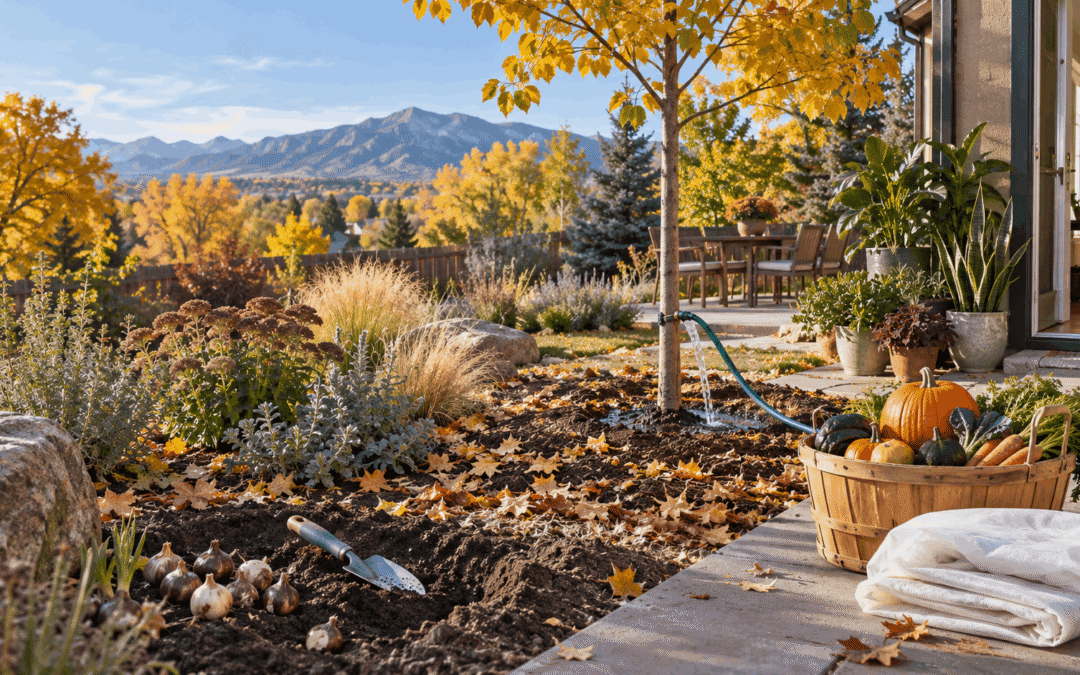
October gardening in Colorado is a game of priorities. Warm sun may invite you outside in shirtsleeves, then a hard freeze shows up overnight like it owns the place. Work from plant health outward: moisture first, planting second, cleanup third and cosmetics last.
This checklist begins with Denver and the Front Range. Adjust it for your elevation, slope, exposure and local forecast. Colorado does not have one fall, and your backyard may not even share the same fall as the yard across town.
What should I do first in my Colorado garden this month?
Check moisture and protect vulnerable plants first. Inspect new trees, shrubs and perennials before routine cleanup. Harvest warm-season vegetables ahead of a damaging freeze. Bring tender houseplants indoors, finish planting hardy bulbs in workable soil and prepare irrigation components for cold nights.
Outdoor flower beds
- Plant spring-flowering bulbs in well-drained soil while the ground is workable.
- Water bulbs after planting to settle soil around them.
- Remove annuals after frost and compost healthy material.
- Discard diseased leaves and stems instead of leaving them in place.
- Leave selected sound stems, seed heads and hollow stalks for winter interest and habitat.
- Add mulch after the soil cools, keeping it off crowns and woody stems.
Do not rush to make every bed look vacuumed. A mixed approach works best. Clean up diseased material and smothering mats, then retain clean leaves and stems where they protect soil or help wildlife.
Lawns
Keep mowing cool-season turf while it is actively growing. Remove no more than about one-third of the blade at a time. Mulch-mow a light layer of leaves into the lawn, but remove heavy, wet mats that block light and trap moisture.
Water turf if October stays dry, especially new seed or sod and lawns on windy south or west exposures. Follow local watering rules. Drain exposed irrigation lines and protect backflow equipment before hard freezes. Use a service professional where local code requires one.
Do not spread fertilizer merely because a bag says “winterizer.” Product choice and timing should match turf type, soil needs and local restrictions. Avoid fertilizer on frozen ground or before runoff-producing weather.
Trees and shrubs
Newly planted woody plants are October VIPs. Check moisture across the root ball and surrounding soil. Water slowly if dry. CSU advises watering in fall and winter during extended dry periods when air and soil are above 40 degrees and snow does not cover the ground.
Inspect mulch. Maintain a broad layer over the root zone, but pull it away from trunks. Remove damaged, dead or hazardous branches when necessary. Save routine shaping and major pruning for the season appropriate to that species.
Wrap young, thin-barked trees only when sunscald risk warrants it, using an appropriate light-colored tree wrap from late fall through early spring. Remove it on schedule. Do not leave material trapping moisture around the trunk year after year.
Vegetable gardens
Harvest tomatoes, peppers, squash and other tender crops before a damaging freeze. Use season extenders for short cold events, but remember that a sheet does not turn October into July. Covers should reach the ground, stay off tender foliage when possible and come off when temperatures recover.
Plant garlic in a sunny, well-drained bed while the soil remains workable. Clear diseased tomato and cucurbit debris. Healthy residue can be composted if your pile is managed well, but questionable material belongs in the disposal stream accepted by your community.
Add finished compost based on the bed’s needs. Avoid creating a soft, overly rich planting pocket or repeatedly adding phosphorus without a soil test. Colorado’s common alkaline soils require restraint as much as amendment.
Indoor plants
Inspect plants before bringing them indoors. Check leaf undersides, stems, drainage holes and the soil surface for aphids, scale, spider mites, whiteflies or hitchhikers. Isolate returning plants from the main collection for a short observation period.
Move plants before outdoor nights become too cold for the species. Expect some leaf drop as light levels change. Reduce watering as growth slows, but do not let root balls become bone dry. Skip routine fertilizer unless a plant remains in active growth under adequate light.
Place plants away from heating vents and cold window glass. Colorado homes become very dry after furnaces start. Grouping plants can modestly raise local humidity, but wet soil is not a substitute for humid air.
Soil and compost
Use fallen leaves as a resource. Whole or coarsely chopped clean leaves can cover beds, build leaf mold or add carbon to compost. PlantTalk Colorado notes that leaves are carbon-rich and need moisture plus a nitrogen source for faster composting.
Do not dig wet clay. It compacts into chunks that can last longer than your enthusiasm. Wait until the soil crumbles rather than smears. Keep foot traffic off wet beds, and use permanent paths where possible.
If plants repeatedly struggle, order a soil test before buying another amendment. Test results can help explain pH, salts, organic matter and nutrient levels. “Add more stuff” is not a soil-management plan.
Watering
Shift from automatic summer watering to observation. Probe the soil. Give priority to new plants, evergreens, shallow-rooted species and warm or windy exposures. Water slowly enough for Colorado clay to absorb it.
After irrigation is winterized, keep a practical way to water during dry weather. During winter, choose a mild midday period when air and soil temperatures exceed 40 degrees, there is no snow cover and the ground can accept water.
Weather preparation
- Track overnight lows for your neighborhood, not only the airport.
- Harvest tender produce before a damaging freeze.
- Drain hoses and store nozzles where trapped water cannot split them.
- Secure lightweight pots, covers and décor before Front Range wind.
- Move ceramic pots that can crack from saturated soil and freezing.
- Keep frost cloth ready and label which plants truly deserve rescue.
How does elevation change the checklist?
Complete cold-sensitive work earlier as elevation rises. Mountain soils may freeze while Front Range beds remain workable. Western Slope valleys can hold warmth but may lose irrigation access. Eastern Plains sites dry quickly in wind. Southern Colorado varies sharply by elevation and exposure.
Mountain gardeners should emphasize protection, drainage and spring planting for borderline plants. Western Slope gardeners should plan around irrigation shutoff dates and cold-air pockets. Eastern Plains gardeners should anchor covers and monitor exposed roots. Southern Colorado gardeners need to distinguish lower warm valleys from high, cold communities.
What can wait?
Wait on major pruning unless safety or storm damage demands action. Wait on marginal plants if they would enter winter barely rooted. Wait on broad fertilizer applications without a demonstrated need. Wait to cut every perennial stem until you know whether it provides structure, seed or habitat.
The best October garden is not necessarily the tidiest one. It is the one with moist roots, protected soil, healthy plant material and fewer surprises waiting for spring.
Keep the checklist coming
Get the Garden Wise Journal. Receive practical Colorado reminders and Keith Funk’s seasonal garden guidance.
Join at GardenWiseGuy.com.From The Garden Newsletter
Get show updates, garden tips, and special offers for Garden Wise Guy listeners.
For the gardener who makes an offer plants cannot refuse. Browse The Gardenfather T-shirt.
Related Garden WiseGuy reading
Sources
- Colorado State University Extension: Fall and Winter Watering of Plants and Trees
- Colorado State University Extension: Fall-Planted Bulbs and Corms
- PlantTalk Colorado: Composting Fall Leaves