
Emerald Ash Borer Has Arrived: Here’s What Colorado Gardeners Need to Know
If you’ve got ash trees in your yard or even on your block, this is one of those topics you do not want to ignore.
The Emerald Ash Borer (EAB) is no longer “coming soon.” It’s here, it’s spreading fast along the Front Range, and it’s already been confirmed in more than 20 cities, including Denver, Aurora, and Arvada. First spotted in Boulder back in 2013, this tiny metallic-green beetle has quietly become one of the biggest threats to our urban tree canopy.
And here’s the hard truth: if an ash tree becomes infested and isn’t treated, it will die. Usually within 2 to 4 years.
Why This Matters (A Lot)
Ash trees make up roughly 15% of Colorado’s urban forest, and in some neighborhoods, it’s even higher. That means entire streets, parks, and backyards could lose mature shade trees over the next decade.
This isn’t just about losing a tree. It’s about:
- Less shade and higher summer temps
- Increased energy costs
- Reduced property value
- A big hit to the character of our neighborhoods
What Exactly Is Emerald Ash Borer?
EAB is an invasive beetle from Asia that likely hitchhiked its way into North America through wood packing materials in the 1990s.
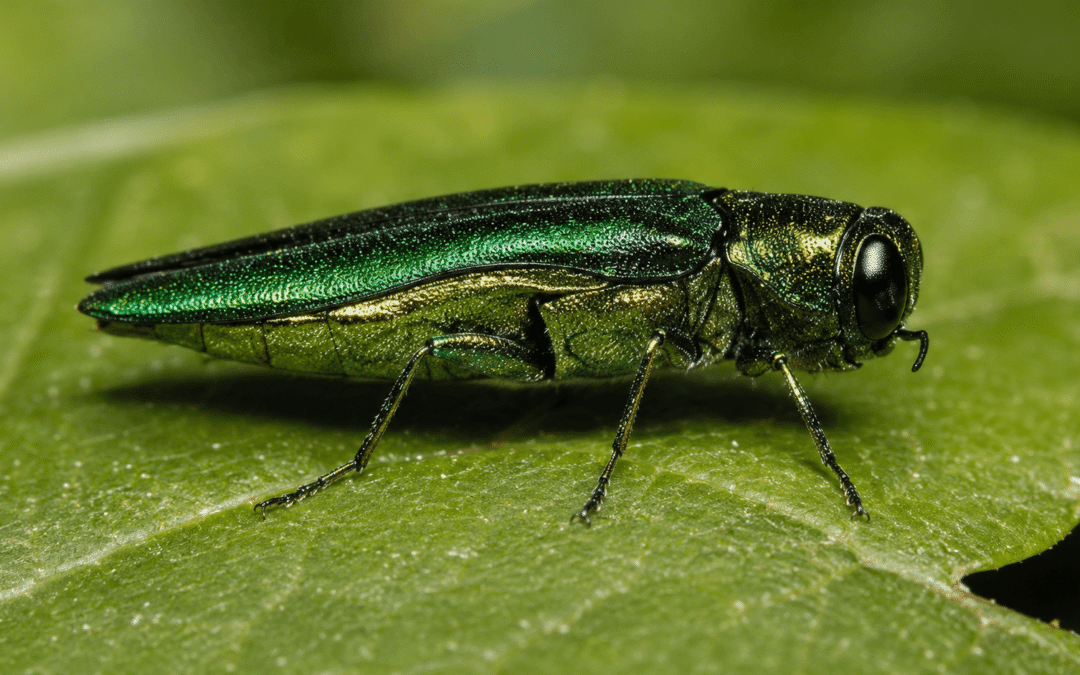
The adults are small, about half an inch long, with a metallic emerald-green color and a coppery underside. They’re active from late May through early fall, but the real damage happens out of sight.
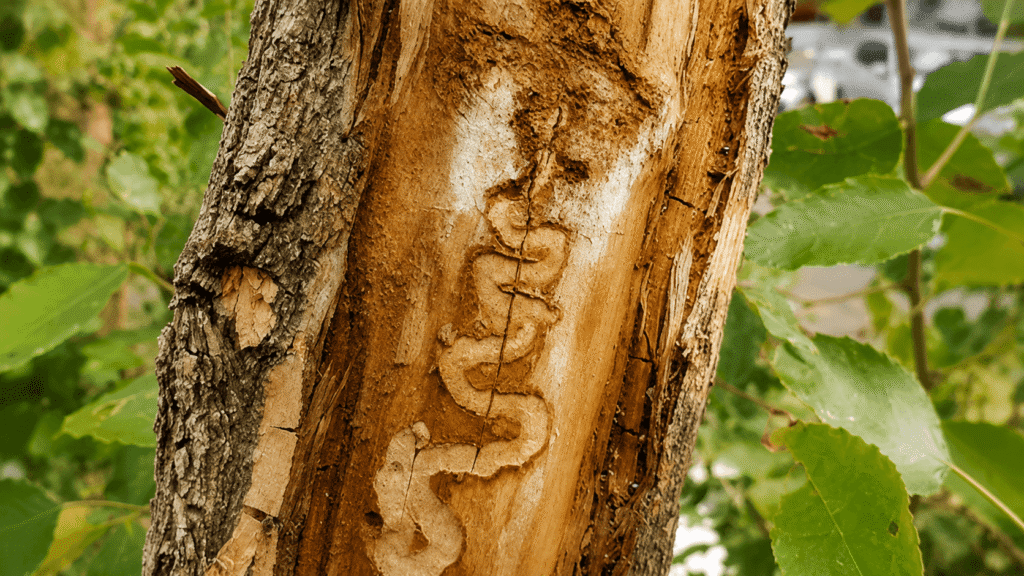
After hatching, the larvae tunnel under the bark and feed on the tree’s vascular system, the part that moves water and nutrients. They create winding, S-shaped galleries that essentially strangle the tree from the inside out.
Healthy tree or stressed tree, it does not matter. EAB will take them both.
Signs Your Ash Tree May Be in Trouble
This is where being observant pays off. Watch for:
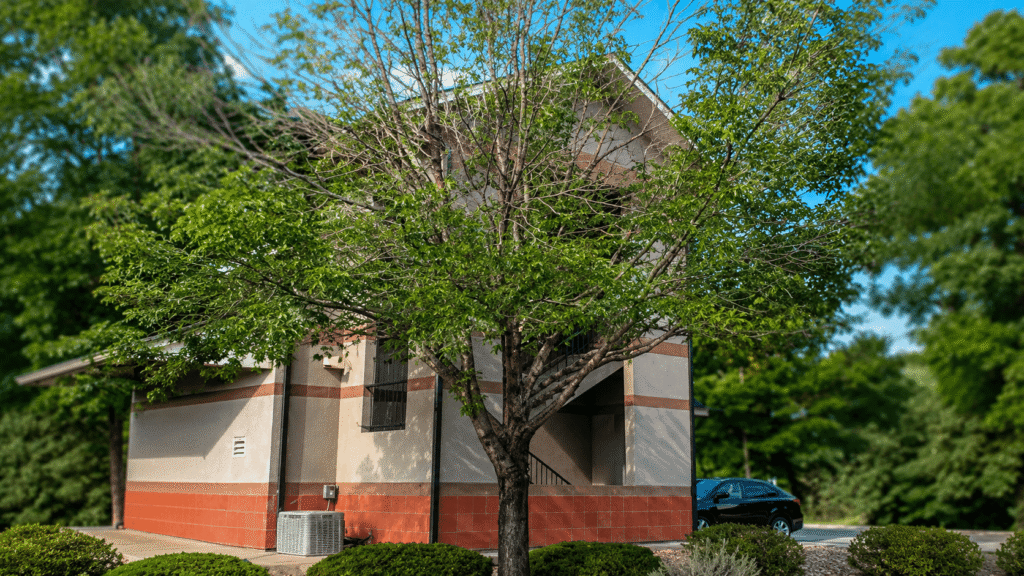
- Thinning leaves in the upper canopy
- D-shaped exit holes in the bark (about 1/8 inch wide)
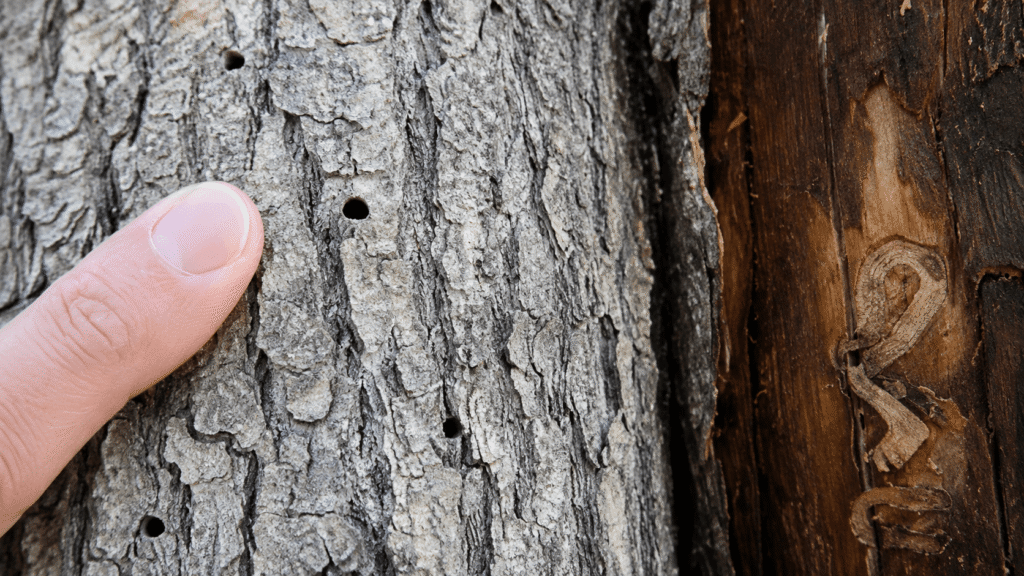
- Vertical splits in the bark
- S-shaped tunnels under the bark (you’ll see these if bark starts peeling)
By the time symptoms are obvious, the infestation is often already well underway so early awareness is key.
First Step: Do You Even Have an Ash Tree?
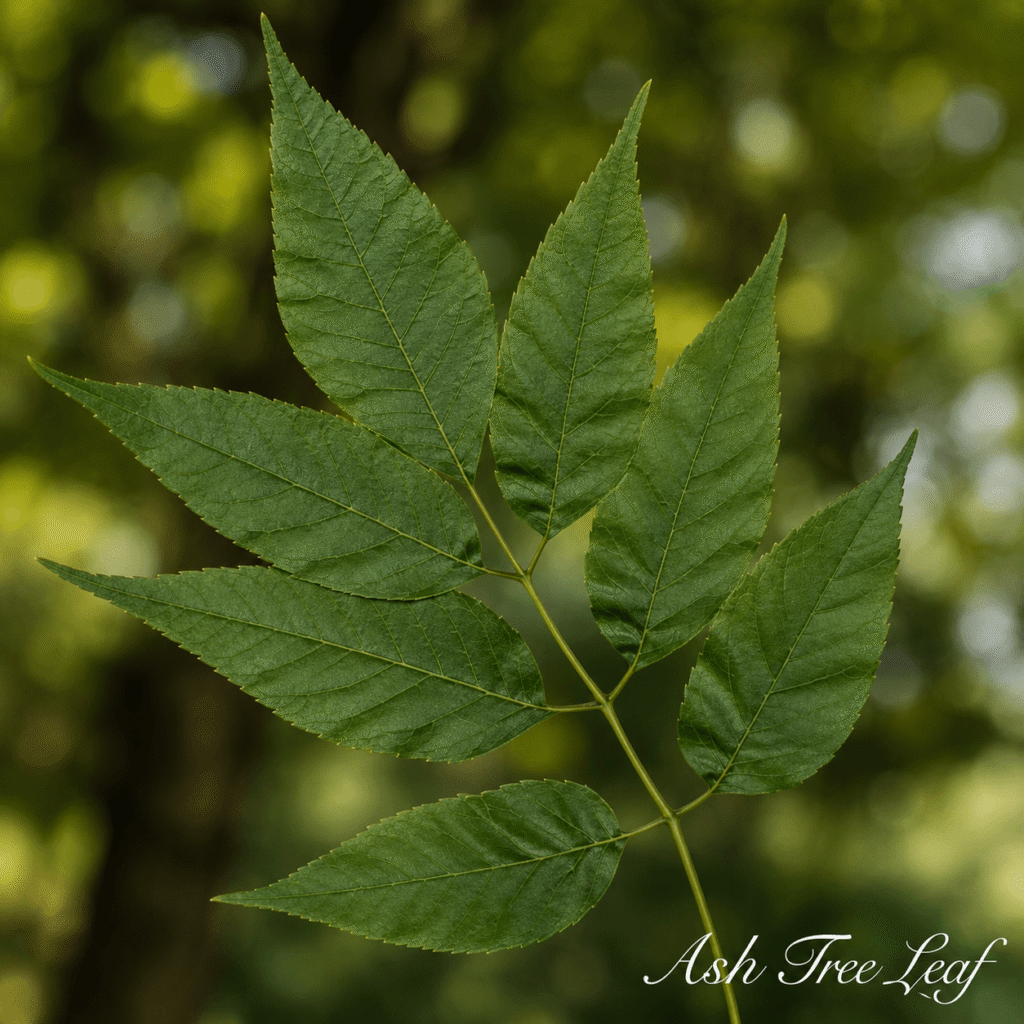
A surprising number of people are not sure. Here are a couple quick identifiers:
- Leaves grow directly opposite each other on the branch
- Leaves are compound (made up of 5 to 9 leaflets)
- Mature bark has a distinct diamond-shaped pattern
If that sounds like something in your yard, it’s time to make a plan.
Your Options: Treat or Remove
You’ve got two realistic paths:
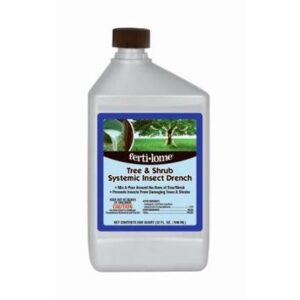 1. DIY Treatment.
A preventative soil drench around the base of the tree can be very effective on younger trees less than 2’ in diameter—but it is a once-per-year ongoing commitment. Think of it as routine healthcare for your tree each year in late summer or fall.
2. Treatment (for trees you want to keep)
Preventative trunk injections by a professional arborist can be very effective and protect your tree for two years—but they are an ongoing commitment. Think of it as routine healthcare for your tree every two years.
3. Removal and replacement
If the tree is already heavily infested or declining, removal may be the better long-term choice. The good news? This is a great opportunity to diversify your landscape with species better suited for the future.
If you’re unsure, bring in a certified arborist. It’s worth getting a professional opinion before making the call.
One Simple Thing That Makes a Big Difference
Don’t move firewood.
This is how EAB spreads long distances. The beetles do not travel far on their own, but we move them all over the state without realizing it.
Buy firewood where you burn it. Always.
It sounds small, but it’s one of the most effective ways to slow the spread.
A Quick Reality Check and Some Hope
We are going to lose ash trees in Colorado. There’s no sugarcoating that.
But we’re not powerless here.
Homeowners who act early can protect valuable trees. Communities that plan ahead can replant smarter and build more resilient urban forests. And as gardeners, we can be part of that solution choosing diverse species, staying informed, and helping neighbors understand what’s happening.
If you’ve got an ash tree, now is the time to pay attention not panic, just pay attention.
And if you want a deep dive into identification or treatment options, or to see where EAB has been confirmed, the Colorado State Forest Service has excellent resources online.
Consult the Colorado State Forest Service for a statewide EAB map, step-by-step identification guides, and resources for managing your trees.
Publications
- EAB Quick Guide
(6 MB PDF) - Insecticide Options for Protecting Ash Trees from Emerald Ash Borer
(7.5 MB PDF) - Diagnosing Emerald Ash Borer and Other Ash Tree Damage: A Diagnostic Field Guide
(5.6 MB PDF) - Insecticides Used to Control Emerald Ash Borer on Residential Shade Trees
Partner Websites
- Don’t Move Firewood
- Find an Arborist to Inspect Your Ash Tree
- Emerald Ash Borer Information Network from Michigan State University & USDA Forest Service
Stay observant out there and keep growing smarter.
Garden Wise Answers: why a blue spruce browns from the middle out.
Still have a gardening question?
Keith answers Colorado gardening questions on the radio show and online. Tell him what you are growing, where in Colorado you are growing it, and what is going wrong.
Want seasonal Colorado gardening guidance?
The Garden Wise Journal arrives once a month with what to do in the garden right now, plus show updates from Keith.
Shop Garden-Inspired Gear
Browse the ShopGardenLife collection for garden-inspired tees and products made for people who love growing, learning, and living the garden life.