
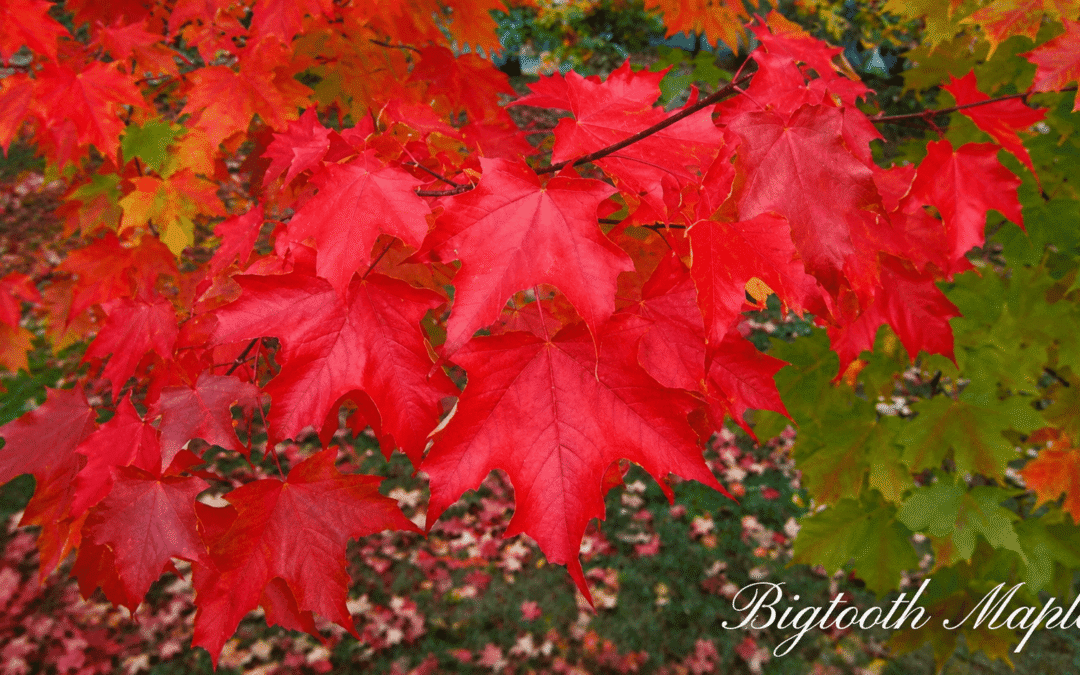
Bigtooth Maple – A Native Treasure
Acer grandidentatum
Bigtooth maple, also known as Wasatch Maple, is one of those trees that quietly earn respect. It’s native, adaptable, and genuinely beautiful in the landscape, especially if you want a smaller- to medium-sized shade tree with excellent fall color and better drought tolerance than many people expect from a maple.
Native Range
Bigtooth maple is native to western North America, with a range that includes western Colorado, southeastern Idaho, western Montana, Wyoming, Utah, Arizona, New Mexico, and west-central Texas, extending into northern Mexico. In the wild, it is commonly found in canyons, foothills, mountain slopes, and other protected sites, often at elevations from about 4,200 to 9,400 feet.
Size and Form
This is a highly variable tree, which is part of its charm. Depending on moisture and site conditions, it may grow as a single-stemmed or multi-stemmed small tree, usually reaching 25 to 50 feet tall, though some sources note it can range from about 25 to 60 feet in height. Its canopy is typically broad and spreading, with a loose, irregular outline.
Landscape Adaptability
Bigtooth maple adapts well to suburban and residential landscapes, especially in dry, alkaline, or rocky soils where many other maples struggle. It prefers well-drained soil and full sun to partial shade and handles limestone and higher pH soils better than many common landscape trees. It’s a strong choice for water-wise gardens, parkways, larger yard spaces, and native plantings. Perfectly adapted to our Colorado conditions.
Drought Hardiness
This tree has real drought resilience once established. In nature, bigtooth maple grows in areas with relatively modest precipitation and has been observed surviving extended dry periods, especially on open sites. It is not the best tree for soggy ground, but in the right setting it can take heat and dryness better than many ornamental maples.
Fall Color
Fall color is one of bigtooth maple’s biggest selling points. Leaves often turn bright yellow, orange, and red, sometimes all on the same tree, and the display can be especially striking in full sun. If you want a native tree that gives you a real autumn show, this one belongs on the shortlist.
Popular Varieties
Bigtooth maple is not overloaded with cultivars, but a few selections do show up in the trade. One of the better-known named selections is “Rocky Mountain Glow”, valued for its good form and fall color.
Rocky Mountain Glow: An upright, oval-shaped cultivar selected for increased heat/drought tolerance and brilliant orange-red fall foliage.
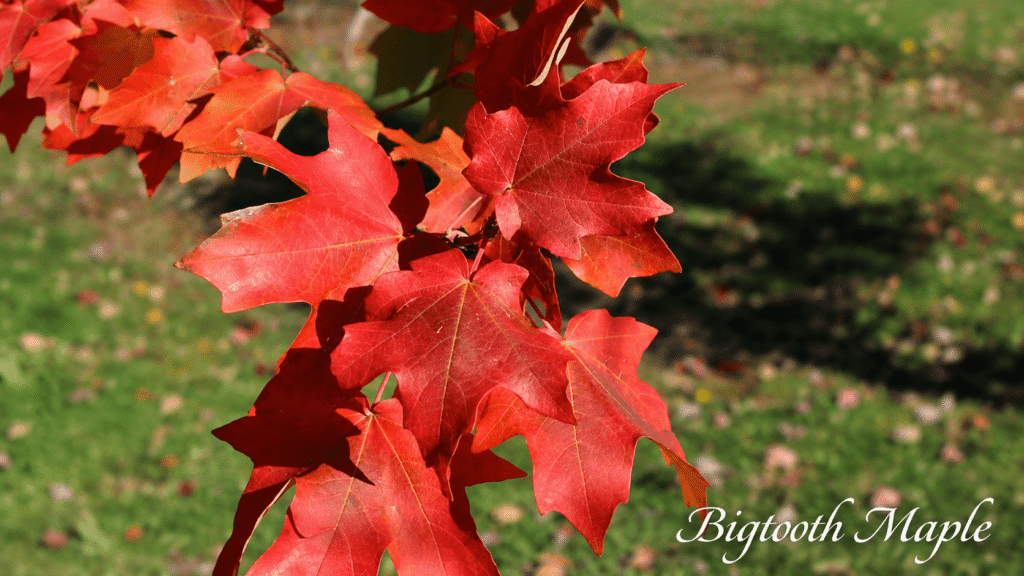
Highland Park: A symmetrical, moderately growing shade tree with deep green summer leaves and reliable vivid red autumn color.
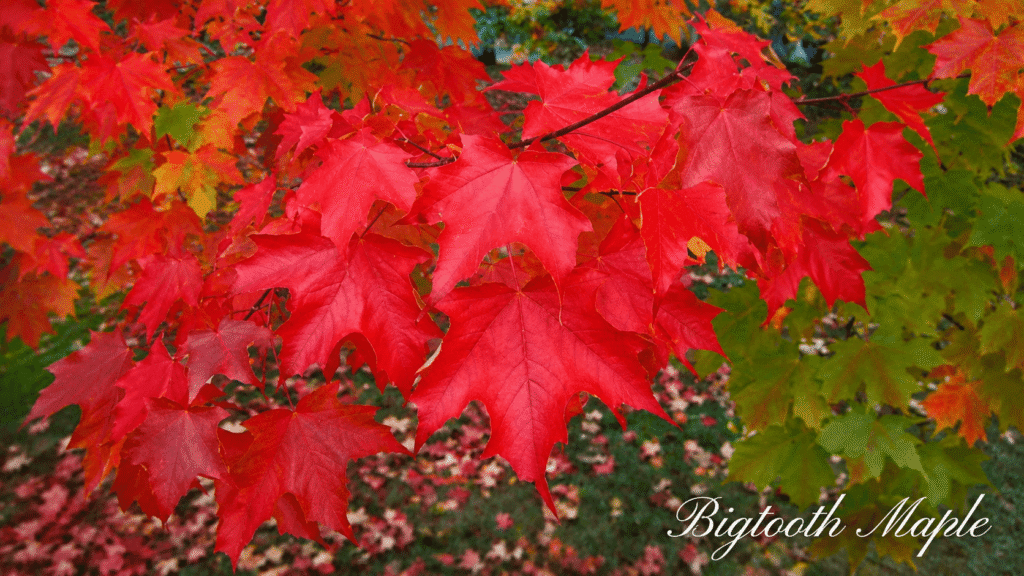
Mesa Glow Bigtooth Maple: A drought-tolerant, cold-hardy deciduous tree developed by New Mexico State University. Growing up to 28 feet tall and 18 feet wide, it features a dense, upright oval shape and boasts vibrant orange-red fall foliage.
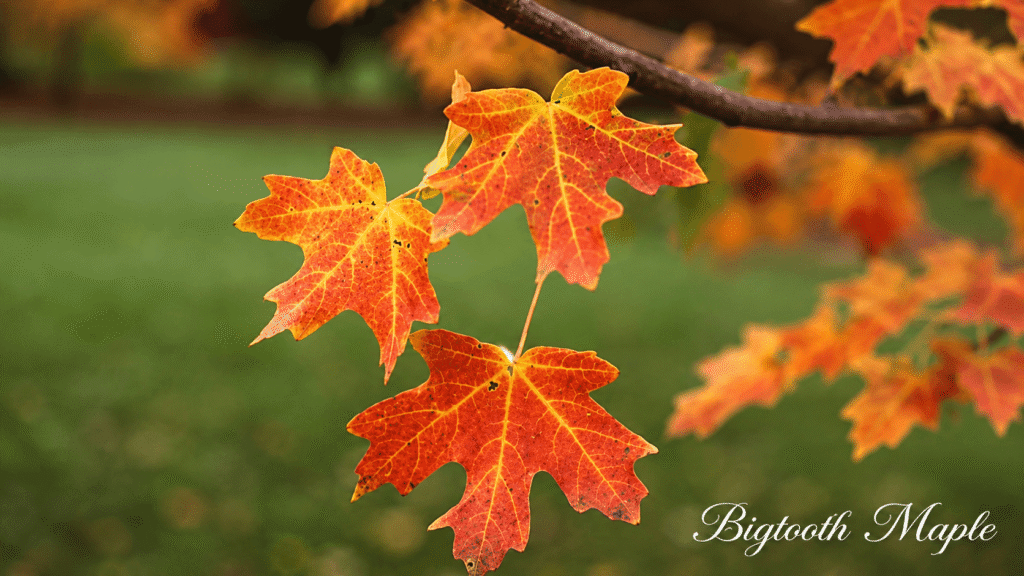
Bigtooth Maple vs. Autumn Blaze Maple
These two trees often get compared, but they are really built for different jobs. Bigtooth maple is a true western native, while Autumn Blaze maple is a hybrid selected for fast growth and dramatic red-orange fall color. Autumn Blaze usually grows faster and more uniformly, making it a popular choice for quick shade, but often has iron chlorosis issues.
Bigtooth maple is often the better fit where drought tolerance, alkaline soil performance without the iron issues, and native-plant value matter most. If you are gardening in Colorado or another dry Western climate, bigtooth maple usually feels more at home in the landscape.
Best Uses in the Garden
Bigtooth maple works well as:
- A small to medium shade tree
- A specimen tree for fall color
- A native tree for dry or alkaline soils
- A good fit for suburban yards where you want something attractive but not enormous
Garden Wise Answers: why a blue spruce browns from the middle out.
Keep reading: if you are choosing this as a replacement tree, start with what Colorado gardeners need to know about the emerald ash borer.
Still have a gardening question?
Keith answers Colorado gardening questions on the radio show and online. Tell him what you are growing, where in Colorado you are growing it, and what is going wrong.
Want seasonal Colorado gardening guidance?
The Garden Wise Journal arrives once a month with what to do in the garden right now, plus show updates from Keith.
Shop Garden-Inspired Gear
Browse the ShopGardenLife collection for garden-inspired tees and products made for people who love growing, learning, and living the garden life.