
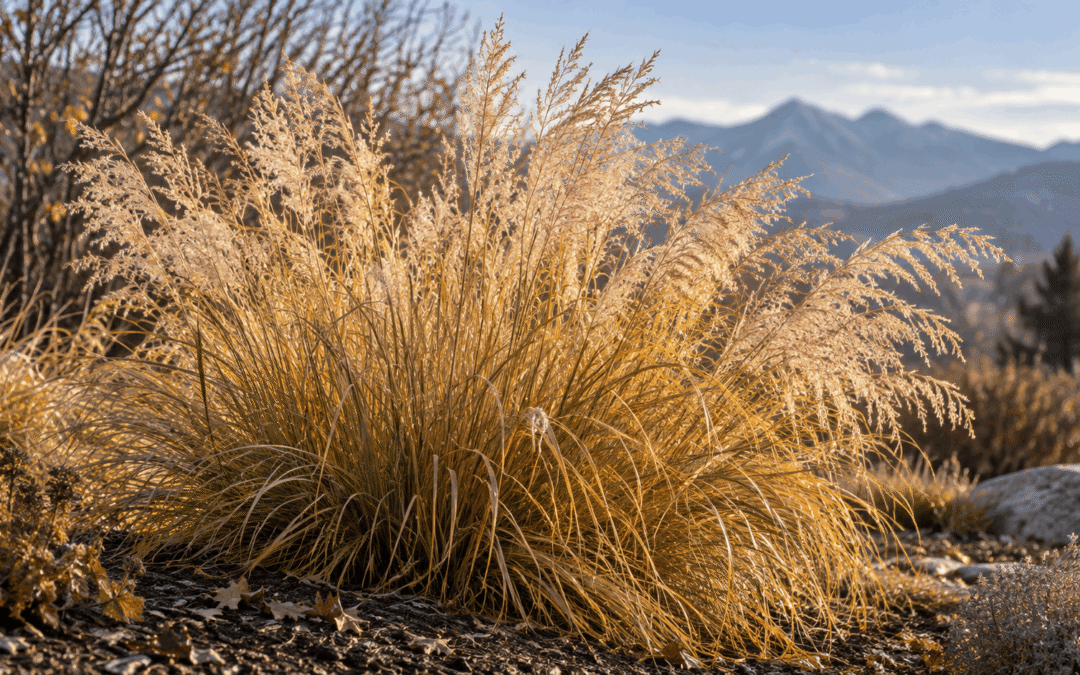
Some grasses stand at attention. Korean feather reed grass brings a softer personality to the border. Its airy late season plumes invite you to look through the plant as much as at it, especially when low light catches the fine texture.
It is worth considering for a Colorado garden, with one important condition: give it a site that fits its needs. This is not a recommendation for every dry corner, gravel strip or unirrigated hillside along the Front Range. A lovely plant in the wrong place is still the wrong plant.
November is a useful time to evaluate its structure and plan a future planting. It is not a reason to divide a warm season grass just before winter. Look at what your garden is missing, choose a suitable location and save the installation for a better opportunity.
Is Korean feather reed grass a good choice for Colorado gardens?
It can suit a protected, appropriately watered Colorado border where you want soft late season texture and have enough growing season for flowering. It is a poor default choice for a very dry, exposed site. Evaluate winter hardiness, light, moisture and local performance before deciding that its attractive plumes belong in your yard.
The phrase “ornamental grass” describes a broad group, not one watering requirement. Colorado’s native shortgrass landscapes should already make us suspicious of assuming that every tall, lush nursery grass thrives under the same conditions. Read the plant information before admiring the price tag.
What is its botanical name?
You will commonly see Korean feather reed grass sold as Calamagrostis brachytricha. Kew Plants of the World Online: Calamagrostis brachytricha currently treats that name as a synonym of Calamagrostis arundinacea. The older name remains useful when checking nursery labels and horticultural references.
This matters because common names can be loose. Take the botanical name with you, and ask the nursery to confirm the actual plant being offered. Do not substitute a different feather reed grass simply because the label shares those three words.
The familiar ‘Karl Foerster’ is a different horticultural plant, usually labeled Calamagrostis × acutiflora ‘Karl Foerster’. If you want the softer Korean grass effect, compare plant identity and flowering habit rather than assuming all feather reed grasses will look alike.
Is Korean feather reed grass native to Colorado?
No. Korean feather reed grass is not native to Colorado or North America. The horticultural plant is associated with eastern Asia. It is commonly sold as Calamagrostis brachytricha, which Kew currently treats as a synonym of Calamagrostis arundinacea.
Plant facts at a glance
- Common name: Korean feather reed grass, also called diamond grass.
- Nursery name: Calamagrostis brachytricha.
- Current Kew treatment: synonym of Calamagrostis arundinacea.
- Plant type: deciduous, clump forming, warm season perennial grass.
- Native status: not native to Colorado or North America. The horticultural plant is associated with eastern Asia.
- Typical size: roughly three to four feet tall in flower and two to three feet wide, depending on conditions.
- Common horticultural hardiness listing: USDA Zones 4 to 9, subject to site and source differences.
- Light and soil: sun to partial shade, with moisture retentive soil that drains.
- Water: a managed moisture site rather than an assumption of unirrigated survival.
- Seasonal role: late summer and autumn texture, followed by a more variable winter display.
The size, zone range and general cultural description above are supported by NC State Extension: Korean Feather Reed Grass. Its entry now uses the broader accepted name, so keep the nursery identity in view when comparing descriptions. A hardiness zone is a starting filter, not a complete Colorado performance guarantee.
What makes its seasonal display different?
Pink toned, airy plumes rise above a lower mound of leaves late in the growing season. Missouri Botanical Garden: Calamagrostis brachytricha describes foliage around two feet high with flowering stems reaching about four feet. This is a useful distinction when deciding what will be hidden behind it.
Treat late summer and fall as the main attraction. Plumes age toward tan, and winter persistence varies with weather and exposure. Do not buy it expecting a perfectly intact feather display through every Front Range windstorm or mountain snow load.
Visit a planting more than once if you can. A grass that looks magnificent at the nursery’s peak display may look quite different beside your patio in February. Both views are relevant. You are choosing a year round garden resident, not a photograph.
Where would it fit along the Front Range?
Begin with a border that already has a sensible water source and some protection from the harshest exposure. CSU Extension: Ornamental Grasses places Korean feather reed grass among the grasses useful in moderately moist to moist gardens and notes its shade tolerance. That is more useful here than a generic drought tolerant label.
Morning light with some relief from intense afternoon exposure may be worth evaluating in a hot urban yard. This is a site selection suggestion, not a guarantee. Observe the actual hours of light and talk with a local grower who has seen the plant perform nearby.
Keep it out of locations where watering it would conflict with neighboring dry garden plants. If one plant needs moisture while the rest need a dry crown, the arrangement creates a maintenance argument you will have to referee all season.
How do other Colorado regions change the choice?
On the Eastern Plains, investigate wind exposure and dependable water before choosing it. On the Western Slope, distinguish a suitable irrigated border from a hot dry landscape where you want little supplemental water. The same regional name can contain very different garden conditions.
In mountain communities, ask about actual flowering performance at comparable elevation. A zone rating addresses winter cold more directly than the length of the growing season. Survival and a satisfying late flower display are separate outcomes.
Southern Colorado gardeners should make the same distinction between warm valleys and higher terrain. Describe your sun, soil and irrigation arrangement when asking for advice. A nursery can be much more specific when you bring those details instead of only a ZIP code.
Soil and water: judge the combination
Avoid reading “moist” as “keep a puddle around the plant.” Inspect drainage after watering and after snow melts. A planting pocket that stays wet while the surrounding bed drains deserves investigation before you add another plant to it.
Likewise, do not read “clay tolerant” as “all Colorado clay behaves identically.” Soil structure, compaction, grade and irrigation all matter. If existing plants struggle in the same spot, identify why rather than treating a new grass as a repair material.
Group plants with compatible needs so you can manage water deliberately. Keep notes during the first growing season and adjust to observed soil conditions. There is no responsible universal gallons per week prescription for every garden, plant size and weather pattern.
What wildlife and pollinator value does it offer?
Treat it mainly as an ornamental structure plant. Do not advertise it as a major nectar source or assume it supports Colorado specialist insects simply because it is a grass. Species specific evidence should guide those claims.
If you want a habitat focused planting, pair your design goals with locally appropriate native plants and documented resources. For a dry sunny location, review alternatives in CSU Extension: Native Grasses for Colorado Landscapes, including blue grama or little bluestem where their needs fit.
Those are alternatives for different goals, not moisture matching companions you should automatically pack into the same irrigated pocket. Choose the planting community first. A diverse garden is useful when its plants can share the care you actually provide.
What about deer, rabbits, pets and toxicity?
NC State describes deer resistance, but resistance is not immunity. Watch the plant where browsing pressure is significant. Do not assume a young planting will be ignored simply because an established grass elsewhere was left alone.
Reliable species specific pet toxicity information was not confirmed for this profile. Do not label the plant pet safe or edible. If you need a planting for a pet chewing area or livestock access, ask your veterinarian about the verified botanical identity before selecting it.
Check for mechanical concerns too. Keep stiff cut stems and leaf edges away from places where people or animals regularly push through. A planting’s usefulness includes how comfortably you can live beside it, not only whether it looks good from the street.
Planting and establishment
Favor spring planting for this warm season grass, especially in colder or more exposed Colorado locations. CSU’s ornamental grass guidance supports spring installation and cautions against late planting of divisions. November is better used to plan spacing and inspect the site.
Choose sound nursery stock with a clear label. Set the crown at the appropriate soil level rather than burying it beneath backfill or mulch. Water the planting thoroughly and monitor both the original root ball and neighboring soil while it establishes.
Give the mature width real room. Measure the distance from the path, nearby shrubs and irrigation fixtures. A small pot can make a three foot planting footprint look imaginary. It will feel much less imaginary when you are trying to walk around it.
Pruning, maintenance and Colorado problems
Where site safety allows, keep attractive growth through winter and cut old growth before new shoots are caught in the cut. Check the base first. Follow local timing and plant condition rather than borrowing a fixed spring cleanup date from another state.
If the plant looks poor, separate the symptoms. Brown tips, weak growth, failure to flower and a persistently wet base do not automatically share a cause. Photograph the entire clump and check conditions before adding fertilizer or changing everything at once.
Keep track of seedlings if they appear, and remove unwanted volunteers while small. Do not assume the horticultural plant is sterile because another feather reed grass cultivar is. If spread becomes a problem, review the plant identity and decide whether keeping it suits your garden.
For fire exposed properties, dried foliage changes the maintenance decision. Use local mitigation guidance rather than keeping stems solely for appearance. This is especially relevant when a planting sits near a structure or along a required access route.
Companions and design uses
Use it where backlighting reveals the plumes, with enough open space around the clump to show its shape. A small group can repeat texture through a border. One plant can also work as a focal point when the surrounding shapes are quieter.
Consider compatible moisture garden perennials such as locally suitable coneflower, hardy geranium or coral bells selections, after checking their individual light and water needs. These are design candidates to evaluate, not a claim that every cultivar belongs in the same conditions.
Avoid planting it among drought adapted perennials simply because both appear on a list of Colorado plants. Color harmony cannot fix incompatible irrigation. Use the existing Blue Mist Spirea Colorado Plant Personality Profile to compare care needs before combining a dry site shrub with a moisture preferring grass.
Who should choose it, and who should pass?
Choose it if you want a softer late season grass, have a suitable watered border and are willing to confirm local performance. Pass if you need a reliably dry site native, have a very short growing season or expect rigid plumes to remain perfect all winter.
The practical recommendation is conditional: this plant earns consideration because it offers texture different from more formal feather reed grasses. Keith’s garden advice works best when that visual appeal is matched to a real site and a manageable care routine.
Before buying, stand in the proposed spot and answer four questions: how much light, what water source, how well does it drain, and what is the plant meant to contribute? When those answers fit, the plant has a fair chance to do its job. When they do not, choose something better suited and keep gardening.
Sources
- Kew Plants of the World Online: Calamagrostis brachytricha
- NC State Extension: Korean Feather Reed Grass
- Missouri Botanical Garden: Calamagrostis brachytricha
- CSU Extension: Ornamental Grasses
- CSU Extension: Native Grasses for Colorado Landscapes
Keep growing with Garden WiseGuy
Get the Garden Wise Journal. Join Keith Funk for practical Colorado gardening guidance, seasonal reminders, and useful ideas that fit real yards.
Sign upFrom The Garden Newsletter
Get show updates, garden tips, and special offers for Garden Wise Guy listeners.
A little garden humor for the off-season. See The Gardenfather T-shirt for plant lovers and master gardeners.
Related Garden WiseGuy reading
- September Lawn and Garden Tips for Colorado
- Russian Sage: Colorado’s Lavender-Blue Garden Superstar
- Monthly Tips
Keep Growing with the Garden Wise Guy
Colorado gardening does not have to be complicated. Get practical, no-nonsense advice from Keith Funk to help you choose better plants, avoid costly mistakes, and grow a healthier landscape in every season.
Follow Keith Funk
Stay connected for seasonal tips, practical plant advice, radio show updates, and more Colorado gardening wisdom.
Live the Garden Life
Gardening is more than a hobby. It is a way of life. Visit GardenLife for garden-inspired tees, caps, and gear created for people who would rather be outside growing something.
Keep learning. Keep planting. Keep growing wiser.