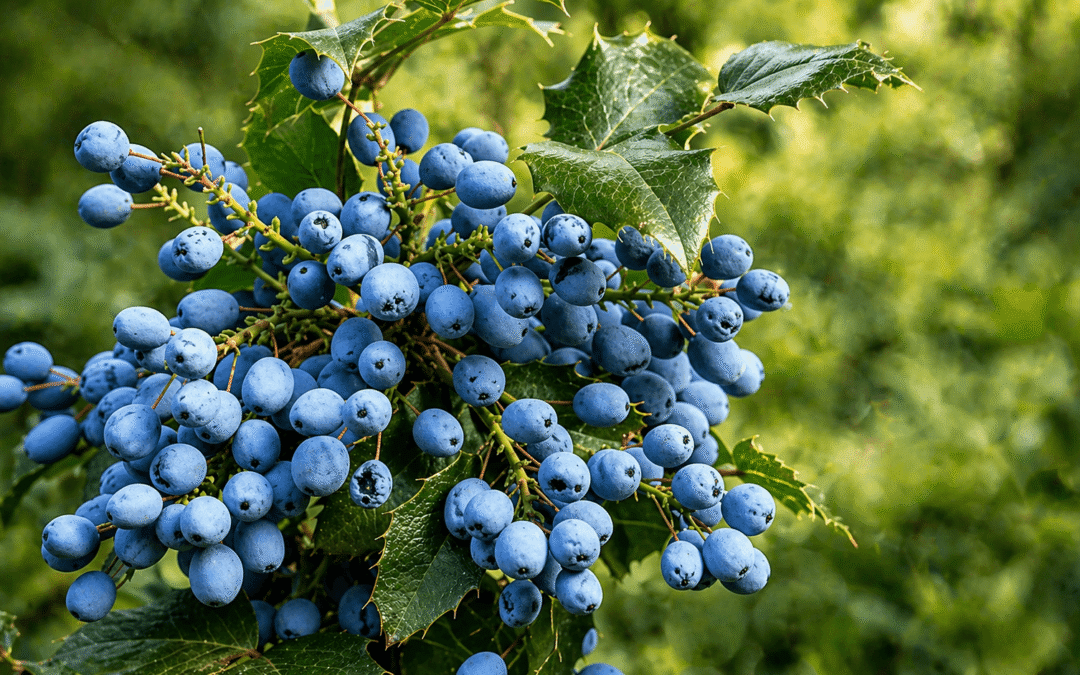

If you want a shrub that quietly does its job twelve months a year, Oregon Grape Holly belongs in the conversation. It flowers when we’re desperate for color. It feeds bees before much else is blooming. It provides evergreen structure in winter. And once established, It minds its own business.
Oregon grape (Berberis aquifolium, formerly Mahonia aquifolium) is one of the most useful evergreen shrubs we have for Western landscapes. It’s native to the Pacific Northwest, adaptable across the Rockies, and tough enough for real-world landscapes.
The Classic: Tall Oregon Grape
Berberis aquifolium (syn. Mahonia aquifolium). This is the upright, architectural version.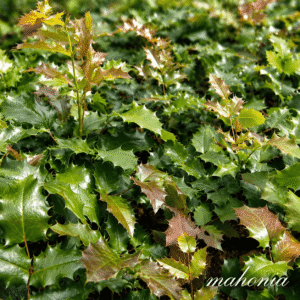
- 6-8 feet tall
- Narrow, columnar habit
- Glossy, holly-like evergreen leaves
- Coppery new growth
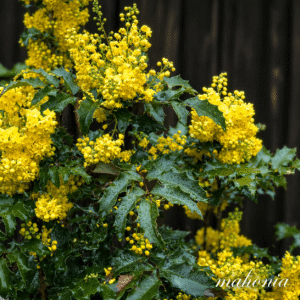
- Yellow flower clusters in mid- to late spring
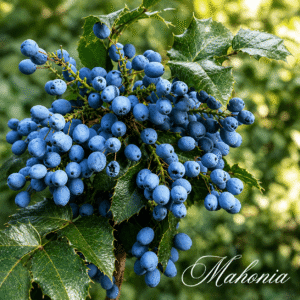
- Blue-black berries in the summer and autumn
The flowers are fragrant if you lean in. Bees certainly do. By late summer into fall, the non-toxic, dusty blue berries develop. They’re tart (think pucker), but birds love them. You’ll get heavier fruit set if more than one plant is nearby.
This shrub works beautifully as:
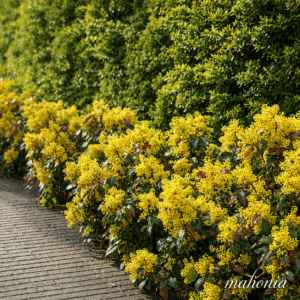
- A narrow hedge
- A woodland edge transition
- An evergreen anchor in mixed borders
- A privacy screen without bulk
A Smarter Fit for Smaller Spaces: Compact Oregon Grape Holly
Berberis aquifolium ‘Compacta’. Same glossy foliage. Same yellow blooms. Same berries. Just in a more disciplined size.
- 3-4 feet tall
- Dense, tidy growth
- Excellent under windows
- Ideal for foundation plantings
If you like the look but don’t want a 6-foot shrub, this is your plant. It keeps its shape better in tighter landscapes and feels more intentional in modern designs.
The Colorado Native You Should Be Using More: Creeping Oregon Grape
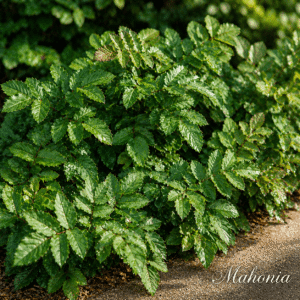 Berberis repens (Mahonia repens). This is the groundcover form native to Colorado forests. Often overlooked and underutilized.
- 8-16 inches tall
- Spreads slowly by rhizomes
- Thrives in dry shade
- Excellent under pines and spruce trees.
The foliage often turns deep bronze or reddish-purple in winter, adding unexpected color when everything else is asleep. If you garden along the Front Range or foothills, this plant already knows how to live here. It’s adapted to conifer understories, lean soils, and real Colorado conditions. It’s one of the best evergreen native groundcovers we have.
Growing Conditions for Your Oregon Grape Holly, Regardless of the Variety.
Exposure: Sun to shade
Soil: Well-drained; tolerates poor soils
Water: Regular the first season; drought-tolerant once established
USDA Zones: 5–9
A few Garden Wise notes:
- Full sun = tighter growth and heavier bloom but may need supplemental water.
- Partial shade = more relaxed habit, excellent drought tolerance once established.
- Avoid harsh winter wind exposure — evergreen leaves can dry out.
- Water deeply before the ground freezes going into winter.
Right plant. Right place. Minimal babysitting.
Maintenance
This is not a high-maintenance shrub.
- Prune after flowering if shaping is needed
- Remove older stems at ground level to rejuvenate
- Space 4–6 feet apart for hedge effect
- Keep away from tight walkways (those leaves are spiny)
It behaves better if you don’t overmanage it.
Wildlife & Ecological Value
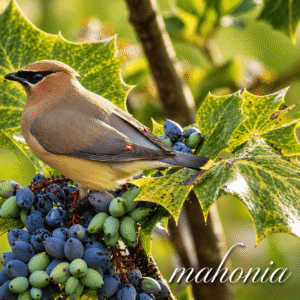
Oregon grape quietly supports the ecosystem.
- Early-season nectar for bees and emerging pollinators
- Berries for robins, waxwings, and other birds
- Dense evergreen shelter for wildlife
- Rhizomes help stabilize soil on slopes
- Did I mention that deer and rabbits won’t touch it?
If you’re building a habitat garden, this plant checks multiple boxes.
Bonus Value: Edible & Historical Uses
The berries are edible — very tart — but make excellent jelly or wine.
The roots contain berberine and have a long history of traditional medicinal use. They also produce a rich yellow dye.
Gardening isn’t just a hobby… it’s a lifestyle.
Stay Garden Wise, My Friends
Keep your shovel sharp, be careful where you dibble, and stay Garden Wise.
Radio Show
Saturday Mornings
Catch The Garden Wise Radio Show for practical garden talk.
Shop Now
Garden Lifestyle Gear
Browse Clever Gardening tees, hats, and gifts.