
November can make a Colorado gardener feel both late and early. Too late for the tomatoes. Too early to quit checking the yard. The useful response is to stop grading yourself against somebody else’s weather and look at the conditions outside your door.
This Colorado fall garden checklist works on either side of the first hard freeze. By November, that freeze may already be behind you, particularly at higher elevations. If it has not arrived in your neighborhood, move tender plants and equipment protection to the front of the line.
Start with Denver and the Front Range, then adjust for your elevation, exposure and available water. There is no prize for completing a task that your garden no longer needs. There is considerable satisfaction in finding the hose before the next warm afternoon.
What belongs on a Colorado fall garden checklist before the first hard freeze?
Protect vulnerable plants and equipment first. Harvest remaining tender crops, bring tropical plants indoors, disconnect and drain hoses, and arrange proper irrigation winterization. Then inspect new landscape plants and decide what cleanup is useful. If the freeze already happened, assess what remains rather than repeating work whose window has passed.
Make a quick circuit of the property with a notebook. Divide observations into three groups: do now, monitor and ask. That last group matters. An unidentified shrub does not become easier to prune because you are holding sharp tools.
For the broader root protection plan, use October planting and root care. For a record of last month’s priorities, compare the October Colorado fall garden checklist with what you actually finished. November should build on that work, not duplicate it.
Outdoor beds: tidy the edges and keep useful structure
Remove litter and clear paths. Pull obvious weeds before they disappear under the seasonal debris, provided the soil is workable. Leave healthy seed heads and standing stems where they fit the garden and do not interfere with access or fire mitigation.
Work from the path rather than walking through wet beds. Use plant markers and photographs to identify crowns you might otherwise step on. If a plant has vanished completely into dormancy, a marker now can spare it a shovel next spring.
Do not turn leaf management into an all or nothing argument. Clear leaves from places where they create a problem. Keep suitable material in appropriate beds. The explanation in the truth about fall leaves in Colorado garden beds can help you choose without stripping the property or burying every plant.
Lawns: finish gently and identify the grass first
Clear heavy leaf mats and keep drains open. If the lawn still needs mowing, follow the normal appropriate height for that grass rather than scalping it for winter. Stop when growth and conditions no longer justify another pass.
Fertilizer needs a separate decision. PlantTalk Colorado: Fall Lawn Fertilization describes a late September to early November window for lower elevation bluegrass lawns, with earlier timing in the mountains. Turf should still be green and soil moist. This does not mean dormant buffalograss needs the same treatment.
If you missed the appropriate window, do not dump fertilizer onto frozen ground to catch up. Identify the turf, review the year’s applications and plan the next suitable opportunity. A bag labeled for winter does not override soil conditions.
Avoid turning a frozen or saturated lawn into the regular route to the compost bin. Shift traffic to a path if you can. Note exposed patches and trouble spots for later evaluation rather than assuming every brown area needs seed immediately.
Trees and shrubs: inspect before adding another job
Check the base of young trees for mulch touching bark, loose protection and visible damage. Look up through the canopy from a safe position. Flag hanging or broken branches for qualified assessment, especially above paths or near power lines.
Consider whether young thin barked trees need seasonal wrap. CSU Extension: Wrapping Trees for Winter gives installation and removal instructions. If you wrap in late November, schedule removal for spring at the same time. That is much easier than rediscovering forgotten wrap in July.
Make a separate note for shrubs that need identification or pruning advice. Photograph their overall shape and any remaining leaves or seed structures. Do not erase those clues with a universal haircut before asking what the plant is.
Perennials: make one decision at a time
Choose a bed and work plant by plant. Keep sound structure where it serves a purpose. Remove problem material selectively. Clear a walkway or a drain without assuming the entire planting must look equally short when you finish.
Hold off on late divisions that would leave small plants facing winter before they can establish. If a clump has become too large, photograph it and mark a suitable spring project. Planning a move now is different from performing it now.
Plants with persistent basal foliage also deserve a pause before cutting. Basal means near the ground. The brown flower stalk may be finished while the low foliage remains useful. Identify the plant before applying advice written for something else.
Vegetables: finish the crop and record the season
If tender vegetables remain ahead of a forecast freeze, harvest what is usable. After the crop is finished, remove supports, string and damaged irrigation fittings. Do not leave plastic ties tangled in vegetation that you intend to compost.
Keep cleanup targeted where disease occurred. CSU Extension: Fall Vegetable Garden Clean Up warns that home composting may not reliably deal with diseased material. Use an appropriate disposal route rather than moving a known problem into next year’s beds. Local collection rules vary, so check yours.
Hardy crops are a different question from tomatoes and peppers. Identify what remains and decide whether protection, harvest or removal makes sense for the crop and forecast. A floating cover is helpful in some situations. It is not a promise of fresh vegetables through any temperature.
Before you forget, write down which varieties performed, where shade became a problem and which bed was awkward to water. Photograph your layout. A useful garden record can be three clear observations. It does not need to become a second hobby.
Bulbs and soil: use the remaining opportunity wisely
If you still have spring flowering bulbs, inspect them and check whether your soil remains suitable for planting. Use the species guidance in CSU Extension: Fall-Planted Bulbs and Corms. Do not dig through frozen soil simply because the packet is still sitting on the kitchen counter.
Avoid working soil that is saturated. If your boots collect thick mud and your tools smear the planting hole, choose another job. Clean tools, sort labels or sketch next year’s beds while the ground becomes workable again.
Order a soil test when its results will answer a real question about amendments or fertility. Do not add lime automatically to a Colorado bed, and do not assume every disappointing crop needs more compost. Start by naming the problem you want to solve.
Watering: keep the equipment plan separate from the plant plan
Winterize automatic irrigation according to the system’s requirements. If you are unsure how to do that safely, use a qualified irrigation professional. Record which valves, lines or components need attention next spring instead of relying on memory.
Then decide how you will inspect plants after the system is off. CSU Extension: Fall and Winter Watering provides the conditions for supplemental winter watering. Keep this guidance accessible. An irrigation shutdown protects equipment, while a plant inspection tells you whether the landscape needs attention.
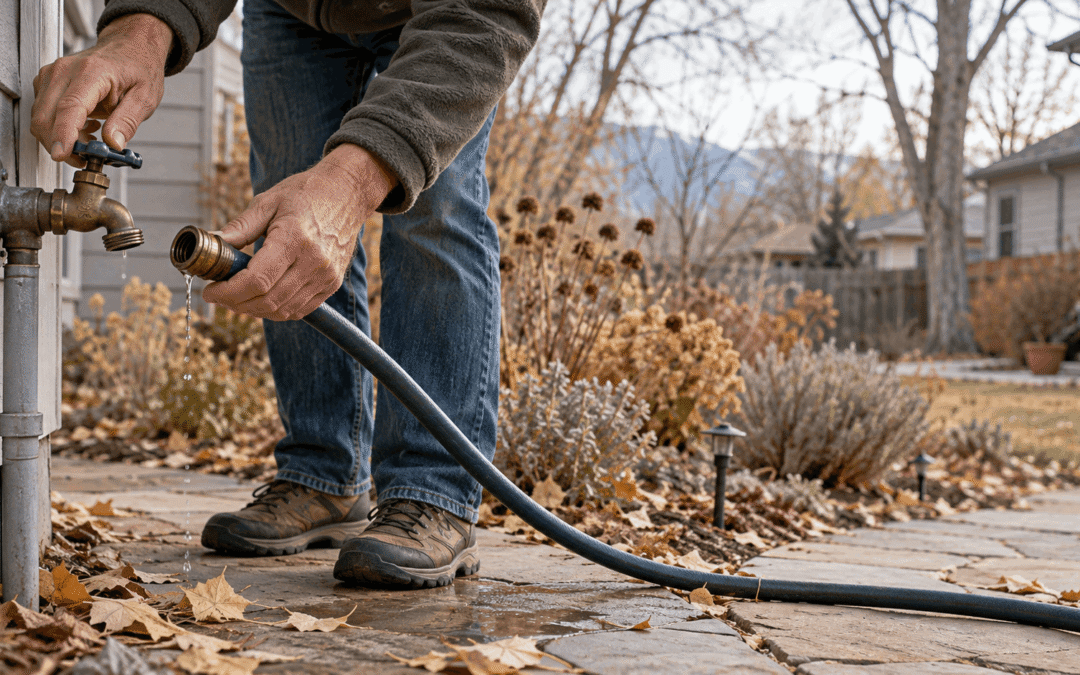
After using a hose, disconnect and drain it so it does not remain attached through freezing weather. Store the nozzle where it is easy to find. Check outdoor faucets and follow the requirements for your particular fixture rather than assuming every faucet is freeze protected.
Indoor plants: reassess light and watering
Tropical houseplants should already be indoors before freezing weather. If you are reading this before your local cold arrives, move them promptly rather than treating the first hard freeze as their deadline. Inspect plants carefully and separate newcomers from established indoor plants.
Iowa State Extension: Bringing Houseplants Indoors explains how changed light, temperature and humidity affect care after plants return indoors. Recheck potting mix before watering. A summer schedule can be a poor fit for a plant receiving much less light in November.
Look at where the plant actually sits. Is it beside cold glass, in a heating vent’s airflow or behind a curtain for most of the day? Adjust the location to the plant’s needs. Clean leaves gently and inspect their undersides as part of your normal routine.
If leaves drop, note the timing and conditions before reaching for fertilizer. Changes in environment and pests require different responses. Photographs and the plant’s name make it easier to get useful advice from a knowledgeable local source.
Weather preparation: make the next change easier
Check the neighborhood forecast rather than relying only on an airport reading. Secure lightweight pots, covers and furniture. Move containers vulnerable to freezing damage into suitable storage, and empty saucers where water could remain trapped.
Keep a shovel and safe walking route available. Plan where snow can go without burying small shrubs or blocking access. Ask your snow removal service to avoid treating planted beds as convenient storage for salted snow.
Do not assume November will be continuously cold or continuously dry. This package is seasonal guidance, not a forecast. A useful preparation plan leaves you ready to respond to both a warm workday and a sudden storm.
How does elevation change this month’s checklist?
Higher elevation gardeners may need to shift from outdoor planting to protection, observation and planning earlier than gardeners in lower valleys. Follow local soil and snow conditions rather than Denver’s calendar. Even nearby properties can differ because of slope, wind, shade and the way cold air settles.
On the Western Slope, check water access and cold pockets. On the Eastern Plains, secure loose materials and inspect exposed new plantings. Southern Colorado gardeners should separate warm valley conditions from nearby high elevation sites before borrowing a timing recommendation.
For mountain properties with persistent snow, avoid forcing access to dormant beds. Concentrate on safe paths, equipment and records. If you need a local planting recommendation, ask your county Extension office about your elevation and site rather than requesting a statewide date.
What should you do now, and what can wait?
Do the work that prevents immediate damage or preserves a closing opportunity. Protect equipment, harvest vulnerable crops, inspect new plants and address hazards. Leave unnecessary reshaping, unidentified plant pruning and major redesign for a suitable later season. Record those projects so waiting becomes a plan rather than forgetting.
- This week: walk the property, photograph concerns and clear access.
- Next suitable workday: complete equipment protection and plant specific tasks.
- Through winter: inspect vulnerable areas when conditions allow.
- Before spring: review notes, identify plants and arrange any needed professional work.
Keep the list somewhere you will see it. Then let yourself finish. November gardening is a series of sensible decisions, not a contest to make the entire yard look brand new before dinner.
Sources
- PlantTalk Colorado: Fall Lawn Fertilization
- CSU Extension: Wrapping Trees for Winter
- CSU Extension: Fall Vegetable Garden Clean Up
- CSU Extension: Fall-Planted Bulbs and Corms
- CSU Extension: Fall and Winter Watering
- Iowa State Extension: Bringing Houseplants Indoors
Keep growing with Garden WiseGuy
Get the Garden Wise Journal. Join Keith Funk for practical Colorado gardening guidance, seasonal reminders, and useful ideas that fit real yards.
Sign upFrom The Garden Newsletter
Get show updates, garden tips, and special offers for Garden Wise Guy listeners.
A little garden humor for the off-season. See The Gardenfather T-shirt for plant lovers and master gardeners.
Related Garden WiseGuy reading
- September Lawn and Garden Tips for Colorado
- Russian Sage: Colorado’s Lavender-Blue Garden Superstar
- Monthly Tips
Keep Growing with the Garden Wise Guy
Colorado gardening does not have to be complicated. Get practical, no-nonsense advice from Keith Funk to help you choose better plants, avoid costly mistakes, and grow a healthier landscape in every season.
Follow Keith Funk
Stay connected for seasonal tips, practical plant advice, radio show updates, and more Colorado gardening wisdom.
Live the Garden Life
Gardening is more than a hobby. It is a way of life. Visit GardenLife for garden-inspired tees, caps, and gear created for people who would rather be outside growing something.
Keep learning. Keep planting. Keep growing wiser.