
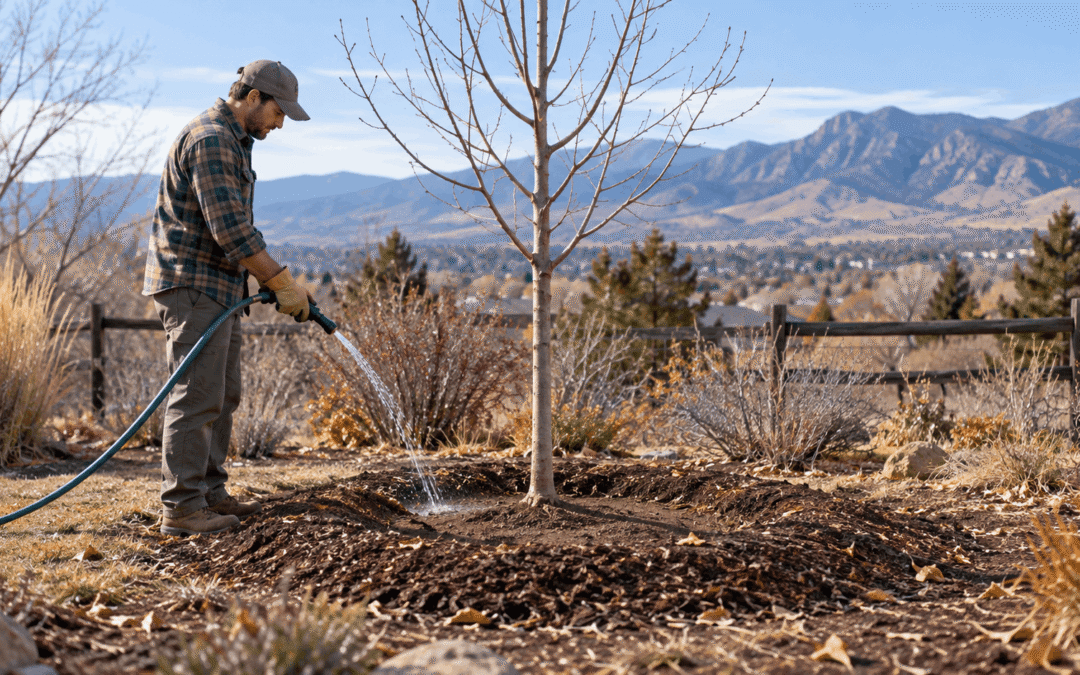
Your garden can look asleep and still need your attention. The leaves are down, the irrigation system is off, and the grass has stopped asking for a haircut. Meanwhile, the young maple beside the driveway is heading into a season of dry wind, bright sun and uncertain moisture.
That is the real job of winterizing Colorado gardens. Help trees, shrubs and perennials enter winter with the right conditions around their roots. Protect vulnerable bark. Keep useful plant structure. Make the next sensible decision when the weather changes.
November is a transition month, not a statewide deadline. In Denver, you may still find workable soil. In a mountain community, the same job may already be under snow. Treat the following plan as a way to read your garden, rather than a promise about what November 2026 will bring.
What matters most when winterizing Colorado gardens?
Start with the condition of the roots, the exposure of the site and the age of each plant. Inspect vulnerable plants before adding products or cutting stems. Then choose the work your garden actually needs: moisture checks, appropriate protection, selective cleanup and a way to keep observing through winter.
Walk the property before you fetch a tool. Which plants went in this year? Where does wind sweep the ground bare? Which bed gets afternoon heat from a wall? Where does melting snow collect? These observations help you spend time where it counts.
A mature shrub in a sheltered bed and a newly planted evergreen on an exposed corner do not need identical treatment. Put them on separate mental lists. A universal routine is convenient for the person holding the hose. Plants have other priorities.
Check the soil before you decide to water
A dry surface does not prove that the entire root zone is dry. Nor does a small patch of lingering snow prove that roots received useful moisture. Check below the surface in accessible soil near a vulnerable plant, taking care not to chop through major roots.
Use a narrow trowel and compare several spots. Note whether the soil feels moist or dry, whether you can penetrate it, and whether water has been collecting nearby. If the ground is frozen, stop. Forcing a tool into it will not improve the information.
The basic winter watering guardrails come from CSU Extension: Fall and Winter Watering: during extended dry periods, water only when air and soil temperatures are above 40°F and snow cover is absent. Midday gives water time to enter the ground before the next cold night. A roughly monthly or twice monthly check during dry weather is a useful reminder, not an instruction to irrigate wet soil.
Keep your decision simple: does this plant need water, and can the soil accept it today? Those are separate questions. If either answer is no, record what you found and check again when conditions change. Follow your water provider’s current rules as well.
Give new plants their own winter plan
Mark every tree, shrub and perennial planted this season on a simple sketch. Include plants installed by a landscaper. It is surprisingly easy to forget the small replacements once their leaves disappear and the bed looks quiet.
Write down how you will reach each one after automatic irrigation is winterized. A hose stored behind a pile of patio furniture is technically available. It is also a fine way to postpone a job until March. Make access easy now.
For container grown plants, inspect the original root ball separately from surrounding soil. The two materials can behave differently. If one is wet and the other dry, tell the nursery or your local Extension office exactly what you found rather than describing the whole bed as “fine.”
Avoid pouring water only against a trunk. Identify the root area you intend to reach and apply slowly enough that water stays there. Pause if it runs toward pavement. The goal is a useful application, not a wet sidewalk and an impressive puddle.
Make mulch useful rather than decorative trouble
Start by pulling existing mulch away from tree bark. You should be able to see the base of the trunk and the transition into the larger roots. If you find a deep mound, remove the excess carefully rather than spreading another bag over it.
CSU Extension: Mulching Trees and Shrubs advises keeping mulch at least six inches from trunks and warns against piling it directly over the root ball of newly planted woody plants. Place material over the surrounding backfill and wider root area as appropriate. Check existing depth before adding more.
Treat perennial crowns individually. The crown is the junction where shoots meet roots. A dry garden perennial that dislikes wet conditions should not disappear beneath a damp blanket of leaves. A broad mulch recommendation is not permission to bury every growing point.
Look for practical problems as you work. Has irrigation tubing become hidden under repeated additions? Does mulch block your view of a rodent tunnel? Has wind moved everything against a fence? Correct those problems before deciding the bed needs a fresh layer.
Near structures in areas with wildfire exposure, use your local mitigation plan to guide material and placement. Colorado State Forest Service: Protect Your Home and Property is a better starting point than copying a photograph of a heavily mulched foundation bed from another climate.
Which trees need trunk protection?
Young trees with thin bark may need seasonal trunk protection against winter sun injury. Identify the tree and its exposure before wrapping it. Use appropriate light colored paper tree wrap, follow installation guidance, and schedule spring removal. Thick barked mature trees do not automatically need the same treatment.
Bright winter sun followed by rapid cooling can injure vulnerable bark. CSU Extension: Wrapping Trees for Winter recommends wrapping at the end of November and removing it around mid April. Its instructions call for overlapping paper wrap from the bottom upward, without fastening into the tree itself.
Put removal on the calendar the day you install it. Photograph the trunk first, especially if an old wound is already present. That record helps you distinguish a preexisting problem from something discovered next spring.
Wrap does not replace protection from animals. If rabbits, voles or deer are active, identify their damage and select a guard or barrier suited to that problem. Check that protection cannot rub, trap debris or tighten around a growing trunk. Ask for help when the damage pattern is unclear.
Keep shrubs out of the November haircut line
Before cutting a shrub, identify it and decide what the cut is supposed to accomplish. Is a branch broken? Is it blocking access? Or does the plant simply look untidy without its leaves? Those are different reasons, and they lead to different decisions.
Avoid treating a dormant shrub like an overgrown hedge by default. You may remove future flowers or erase useful structure. Mark the plant now and look up its pruning needs before making large cuts. A label on a photograph can save a surprising amount of regret.
For an example of plant specific timing, use the Blue Mist Spirea Colorado Plant Personality Profile. Keep woody shrubs separate from herbaceous perennial cleanup in your work list. Brown stems do not all mean the same thing.
Broken limbs that hang over a walkway deserve attention regardless of the calendar. Large branches, overhead work and anything near utilities belong with qualified professionals. Describe the location and immediate concern when you call. You do not need to guess at a diagnosis to request an assessment.
Perennials need selective cleanup
Leave sound stems and seed heads where they add useful structure and do not create a safety problem. Remove clearly diseased material and growth obstructing paths. A bed can look cared for without every plant being reduced to the same height.
CSU Arapahoe County: To Cut Back or Not to Cut Back explains the habitat and winter interest that standing plants can provide. Think of the garden as a set of small habitats rather than a room that needs vacuuming. Still, keep the material appropriate to its location and the condition of the plants.
Take a photograph of each bed before snow conceals the details. Mark tender or easily overlooked crowns. Next spring, those photographs can keep you from stepping on emerging plants while you search for the ones you thought you lost.
If disease was a recurring problem, do not save every stem out of loyalty to wildlife. Collect photographs and identify the issue. Your cleanup plan should reflect a known problem, rather than a guess that all brown foliage is contagious.
How does elevation change the recommendation?
Elevation changes the time available for work, but exposure, snow cover and local soil conditions still decide what you can do. A sheltered lower elevation yard may remain accessible while a higher site is frozen. Finish only tasks that fit the conditions you can verify in your own garden.
Along the Front Range, compare beds within your yard before comparing your yard with a gardening calendar. A north facing corner and a sunny foundation bed may present different working conditions on the same afternoon. Check each rather than averaging them together.
On the Eastern Plains, plan for wind and practical access to water. Put new windbreak plants on the inspection list. On the Western Slope, confirm what water remains available after seasonal irrigation deliveries stop. A watering plan without an available source is only a wish.
In mountain communities, avoid digging through snow to force a low elevation checklist onto the site. Use the accessible period to secure equipment, record plant locations and plan spring work. Persistent snow and frozen soil change the priorities.
Southern Colorado includes warm valleys, high terrain and exposed sites. Do not extend Denver recommendations simply because the address is farther south. Ask your county Extension office about local timing, and choose plants for the actual site rather than the nearest large city.
What mistake do beginners make most often?
A common mistake is treating winter preparation as a single cleanup day. Plants need different decisions, and conditions change after the rake goes away. Make a short list of vulnerable plants, record what you checked and plan a return visit. That habit is more useful than buying another winterizing product.
Do not interpret this as a reason to keep the garden constantly wet or continually protected with more material. Observation should sometimes end with “nothing needed.” That is a successful inspection, not a wasted trip outside.
Be equally cautious about fertilizer. A struggling woody plant is not automatically hungry, and this article is not a fertilizer program. If growth or leaf color was poor, gather information before treating it. Turf has its own species and season specific recommendations, covered in the monthly tips.
What should you do this week?
Choose one manageable inspection and finish the work it reveals. Start with plants installed this year, exposed evergreens and vulnerable young trunks. Check accessible soil, correct mulch touching bark, prepare a usable watering route and write down what needs another look. Let weather and soil conditions set the pace.
- Photograph new plants and note their locations.
- Separate urgent hazards from work that can wait.
- Make one list of plants to inspect during dry weather.
- Put tree wrap removal and follow up checks on your calendar.
- Keep a record of observations instead of relying on memory.
If you only have twenty minutes, inspect the most vulnerable area and record the result. If you have an afternoon, work through the property in sections. A completed small job is easier to maintain than an ambitious plan abandoned halfway through.
Build from the fall work you have already done
If you used the October Colorado fall garden checklist, review what actually happened rather than starting again. Cross off finished work. Carry forward unanswered questions. The seasonal shift is from establishing plants and preparing equipment toward monitoring and protecting what is already there.
The earlier guide to October planting and root care supplies planting context, while Seasonal Wisdom offers the wider seasonal collection. For leaves, read the truth about fall leaves in Colorado garden beds. These pieces help you make the next decision without turning every November afternoon into a complete garden renovation.
When should you ask for help?
Get local advice when bark damage expands, a plant has repeated unexplained decline, soil stays wet long after surrounding areas dry, or an important tree has structural concerns. Bring photographs of the whole plant, the problem area and the surrounding site. Include planting date and watering history if you have them.
Avoid assuming that visible damage proves one cause. Winter stress, planting problems, animal activity and disease can overlap. A good question supported by observations gets you farther than a shopping list of treatments.
Your job this month is to make the garden easier to care for through whatever winter delivers. Keep the plan short enough to use, specific enough to guide action and flexible enough to change when the ground does. That is practical winter preparation in Colorado.
Sources
- CSU Extension: Fall and Winter Watering
- CSU Extension: Mulching Trees and Shrubs
- CSU Extension: Wrapping Trees for Winter
- CSU Arapahoe County: To Cut Back or Not to Cut Back
- Colorado State Forest Service: Protect Your Home and Property
Keep growing with Garden WiseGuy
Get the Garden Wise Journal. Join Keith Funk for practical Colorado gardening guidance, seasonal reminders, and useful ideas that fit real yards.
Sign upFrom The Garden Newsletter
Get show updates, garden tips, and special offers for Garden Wise Guy listeners.
A little garden humor for the off-season. See The Gardenfather T-shirt for plant lovers and master gardeners.
Related Garden WiseGuy reading
- September Lawn and Garden Tips for Colorado
- Russian Sage: Colorado’s Lavender-Blue Garden Superstar
- Monthly Tips
Keep Growing with the Garden Wise Guy
Colorado gardening does not have to be complicated. Get practical, no-nonsense advice from Keith Funk to help you choose better plants, avoid costly mistakes, and grow a healthier landscape in every season.
Follow Keith Funk
Stay connected for seasonal tips, practical plant advice, radio show updates, and more Colorado gardening wisdom.
Live the Garden Life
Gardening is more than a hobby. It is a way of life. Visit GardenLife for garden-inspired tees, caps, and gear created for people who would rather be outside growing something.
Keep learning. Keep planting. Keep growing wiser.